


Acne Scar Treatment in Singapore: A Clinical Guide to Skin Remodelling

Evidence-based, multimodal protocols for atrophic and hypertrophic acne scars — assessed and managed by Dr Sam Pradeep, an SMC-registered doctor with over a decade of clinical experience. Glowwis is a PHMC/HCSA-licensed aesthetic medical clinic providing personalised scar remodelling programmes using HSA-approved technology.

QUALIFIED
EXPERTS

CUSTOMISED
TREATMENTS

RELIABLE
& SAFE

PROVEN
RESULTS

The Science of Acne Scars: Understanding Dermal Remodelling

Acne scars are far more than superficial blemishes. They are the lasting consequence of an intense inflammatory response deep within the skin — one that permanently disrupts the structural integrity of the dermis. Understanding why scars form, and how they differ from one another, is the essential first step in determining the right clinical approach for each individual patient.

When severe or prolonged acne develops, the body initiates a wound-healing response. In cases where that response becomes dysregulated, the balance between tissue destruction and repair breaks down. Inflammation that penetrates the deep dermal layers triggers an immune cascade that can either deplete the skin’s structural collagen or, conversely, stimulate an excess of disorganised fibrotic tissue. The outcome depends on the depth of inflammation, the duration of active acne, and individual biological factors that vary from person to person.

There are three principal mechanisms through which permanent scarring occurs:

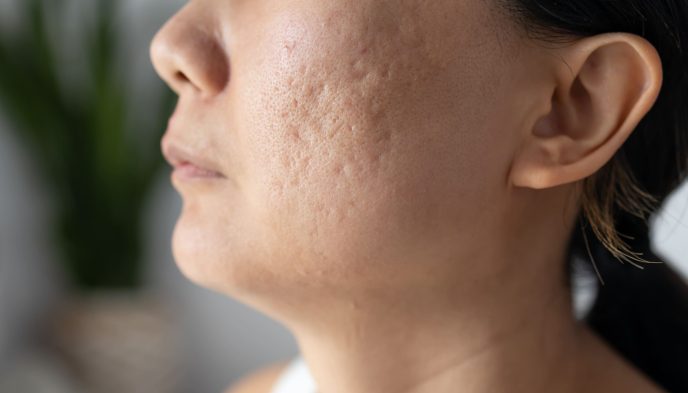
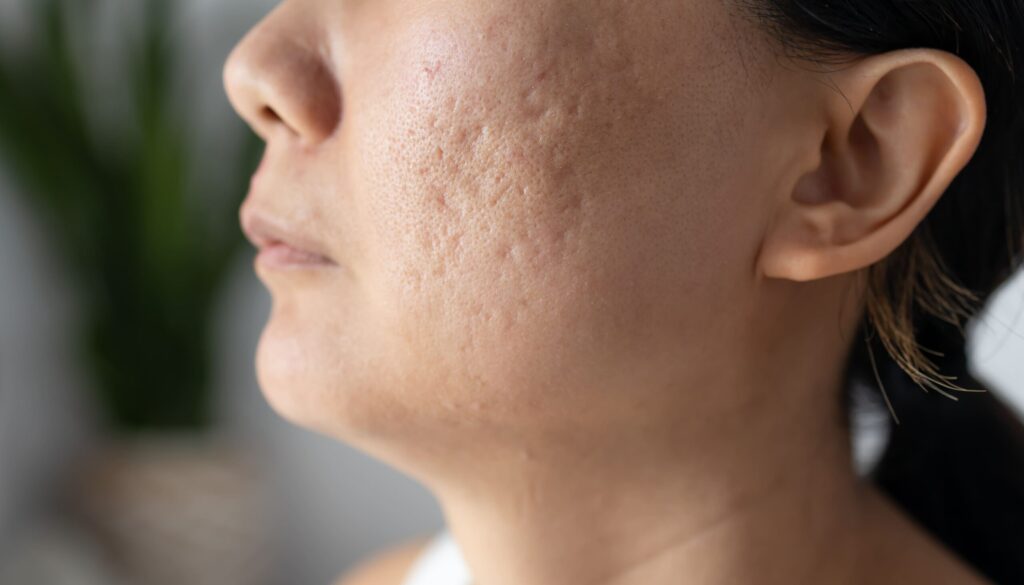
  • Fibroblast & Collagen Depletion: When the body cannot produce sufficient collagen to bridge the wound cavity left by active acne, the skin surface collapses inward, forming atrophic (sunken) scars — the most common presentation seen in patients seeking acne scar removal treatment in Singapore.
  • Fibrous Tethering: Abnormal healing can generate tough fibrous bands within the deep dermis. These bands physically anchor the skin surface downward, producing the characteristic undulating texture of rolling scars. Releasing these tethers — a procedure known as subcision for acne scars — is a clinical prerequisite for meaningful improvement in this scar subtype.
  • Impaired Wound Healing: Where the body overproduces repair tissue, raised hypertrophic or keloidal scars form above the skin surface. These are less common in acne-related scarring but require a distinct clinical approach when present.

The Clinical Pathogenesis of Acne Scarring

Acne scars are not merely a byproduct of breakouts; they are the permanent result of an intensive inflammatory response that disrupts the skin’s structural integrity. During the healing process of severe or prolonged acne, the body’s natural repair mechanism can become impaired, leading to structural deficits in the dermis.

The formation of a scar depends on the balance between tissue damage and the body’s ability to regenerate. When inflammation reaches the deep dermal layers, it triggers an immune response that can either destroy healthy tissue or stimulate an overproduction of fibrotic repair material. Understanding these specific triggers is the first step in curating a targeted clinical remodelling programme.

INFLAMMATION
LOSS OF COLLAGEN
DELAYED HEALING
IMPROPER TREATMENT
TYPE OF ACNE LESIONS

Navigating the Types of Acne Scars: A Clinical Classification

Effective acne scar treatment begins with an accurate diagnosis. Most patients present with a polymorphic mix of scar types, each requiring a specific medical modality for optimal restoration.

Scar Type Clinical Appearance Primary treatment(s) Typical Sessions
Ice-pick Scars Deep, narrow pits resembling small puncture marks in the skin surface TCA CROSS; punch excision for wider variants 2–4 sessions, 4–6 weeks apart
Boxcar Scars Broad, depressed areas with sharply defined vertical edges Fractional CO2 laser; RF microneedling 3–5 sessions
Rolling Scars Wavy or undulating texture caused by deep fibrous bands tethering the skin downward Subcision + dermal fillers or Rejuran S 2–4 sessions, repeated based on clinical response
Hypertrophic scars Raised, thickened tissue forming above the skin surface Steroid injections; vascular lasers Variable

Smoothen Scars And Textures With Glowwis Acne Scar Treatment Options

At Glowwis, our board-certified-aesthetic doctor, Dr Sam, specialises in tailored Acne scar treatments designed to enhance the appearance of scars. After a thorough analysis of your skin’s condition, he will determine the most suitable approach for you.

start today

Get an Acne Scar Treatment That is Perfectly Customised for You

Achieve your aesthetic goals through a customised treatment regime curated by Dr Sam. Book a clinical consultation at Glowwis to discuss how our medical-grade HIFU protocols can address skin laxity and promote long-term rejuvenation.

Clinical Strategies for Acne Scar Restoration in Singapore

Effective acne scar treatment in Singapore requires a structured, multimodal approach. Structural scar damage — particularly atrophic scarring — cannot be meaningfully addressed by topical skincare alone, regardless of formulation or concentration. Over-the-counter options do not penetrate to the dermal depth at which fibrous tethering and collagen loss occur.

A clinically grounded programme proceeds across three stages:

Stage 1 — Medical-grade skin preparation

Clinical-strength retinoids, ascorbic acid derivatives, and targeted topical agents are used in the weeks prior to procedural intervention. These prime the dermis, improve cellular turnover, and help sustain the results of deeper treatments between sessions. This preparatory phase is often overlooked by patients who seek standalone procedures, but it is a meaningful component of a comprehensive programme.

Stage 2 — Procedural dermal remodelling

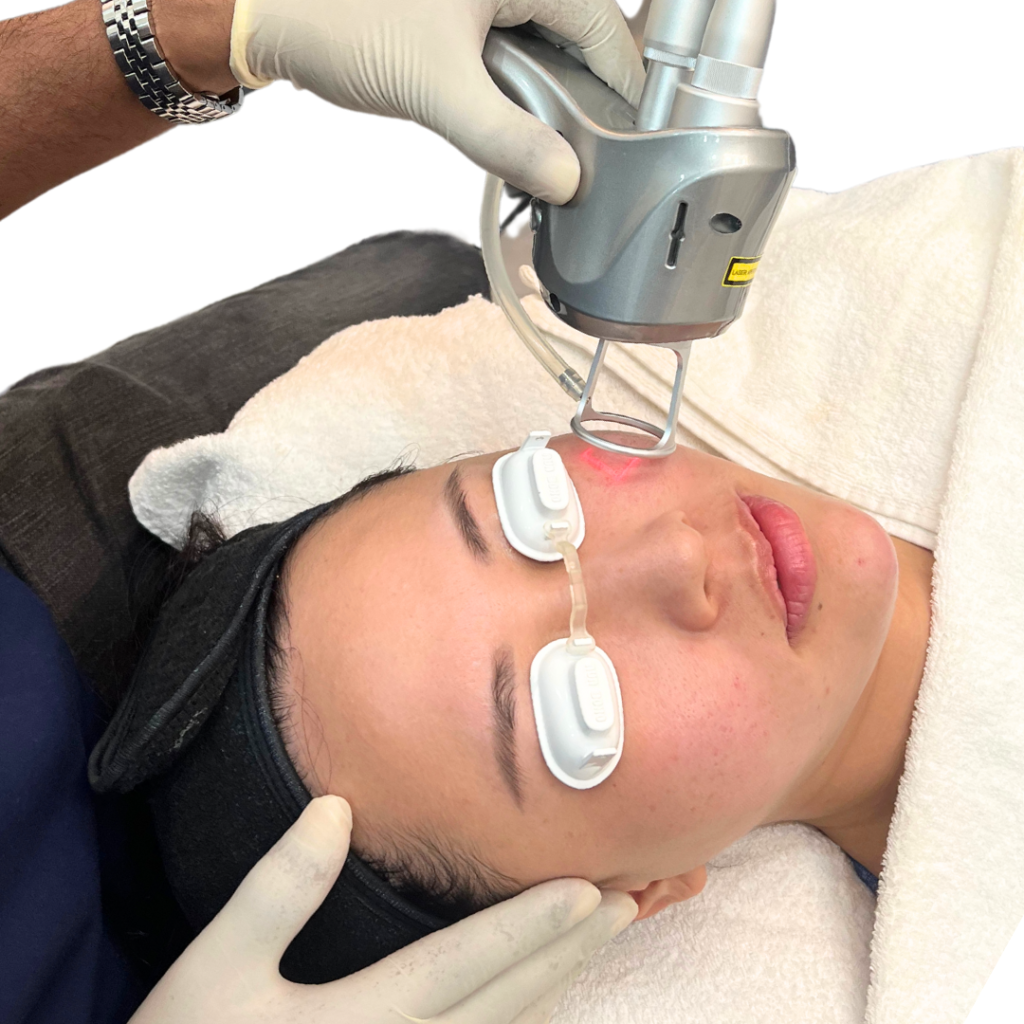
Structural correction of acne scars requires direct intervention at the level of the dermis. Depending on scar classification, the appropriate combination of procedures may include:

  • Subcision for acne scars — to release fibrous tethering beneath rolling scars
  • Fractional CO2 laser — to stimulate collagen synthesis and remodel scar edges (5–7 days social downtime per session)
  • TCA CROSS — targeted reconstruction of ice-pick and narrow boxcar scars
  • RF microneedling — broad collagen induction with 2–4 days social downtime
  • Pico laser — post-inflammatory pigmentation overlying atrophic scars (1–3 days downtime)

Published studies on combination therapy for acne scars report improvement rates generally ranging from 31% to over 78%. Multimodal approaches consistently yield the highest outcomes. Individual results vary depending on scar type, severity, skin type, and protocol followed.

Stage 3 — Maintenance and long-term skin health

Collagen remodelling continues for up to six months following each procedural session. A maintenance protocol — typically involving periodic low-intensity treatments and medical-grade topical care — supports progressive improvements and helps preserve results over time.

A comprehensive dermal assessment by an SMC-registered doctor is essential before any treatment commences. The assessment identifies your specific scar polymorphic profile, skin type, and any contraindications that may affect the choice or sequence of clinical procedures.

Acne Scar Treatment By Dr Sam Pradeep

Clinical excellence at Glowwis is led by our Medical Director, Dr Sam Pradeep. With over a decade of clinical experience, Dr Sam specialises in evidence-based acne scar remodelling protocols designed to restore skin health through medically-supervised treatments.

10+ YEARS OF EXPERIENCE

HONEST & RELIABLE

QUALIFIED

Why You Should Consider Getting Acne Scar Treatment In Singapore?

Renew Skin Texture

Acne scars cause the appearance of skin texture to look more noticeable. Suitable treatment will help smoothen the skin’s surface and making it appear more refined.

Prevention Of Further Damage

Untreated scars may worsen over time and become more challenging to treat. Taking action early can prevent the scars from becoming more severe.

Boost Confidence

Acne scars can significantly impact self-esteem and body image. Addressing them can lead to increased confidence and a positive self-perception.

Minimise Discoloration

Some scars may be accompanied by hyperpigmentation or redness. Treatments can help fade these marks, creating a more even skin tone.

meet our doctor

Dr. Sam Pradeep

Glowwis Aesthetic & Medical Clinic, Medical Director

Every patient is important to me! The most delightful aspect of my profession is to see the satisfaction of my patients and the biggest earning in my career is the patients trust on me.

Dr. Sam has many years of experience in the aesthetic medicine and has worked with industry professionals for more than a decade.

After obtaining his Bachelor of Medicine and Bachelor of Surgery (MBBS), his experience in Anaesthesia, ICU management, Chronic pain management have laid a solid foundation in understanding & managing the pain during aesthetic procedures in a safe and effective manner.

Dr. Sam’s Passion and desire in aesthetic medicine made him to work hard in mastering skills & obtaining required certifications to become an aesthetic physician.

Why Glowwis Acne Scar Treatments?

SCIENTIFICALLY BACKED

COMPREHENSIVE SKIN ANALYSIS

PERSONALISED TREATMENT PLANS

General Habits To Prevent Acne Scars

EARLY TREATMENT

Addressing the early signs of acne helps to reduce inflammation and minimise the risk of scarring.

AVOID HARSH SCRUBS

Steer clear of harsh exfoliating scrubs, as they can exacerbate inflammation and potentially lead to scarring.

SUN PROTECTION

UV rays are one of the common causes of pigmentation that prevents scars from healing. Using sunscreen with SPF30 can provide significant protection to your skin.

STAY HYDRATED

Drink plenty of water to keep your skin hydrated and support its natural healing processes.

BALANCED DIET

Consuming a diet rich and balanced with nutrients, vitamins, and minerals helps with skin healing and maintain overall health.

AVOID OVEREXPOSURE TO THE SUN

Overexposure to sun rays can prevent your skin from healing and darken hyperpigmentation. It is best to apply sunscreen, layer on protective clothing, and put on shades if you’re outdoors.

The Effectiveness Of Customisation At Glowwis Aesthetic & Medical Clinic: Tailored Solutions That Deliver Results

Treatments curated according to skin types & concerns
Tailored by MOH-certified doctor with over 10 years of experience
Comprehensive skin analysis & treatments

talk to our team

Fill up the form and we will get back to you as soon as possible.


    Frequently Asked Questions (FAQs)

    How much does acne scar treatment cost in Singapore?

    Acne scar removal treatment cost in Singapore varies depending on the modality used, the number of sessions required, and the complexity of the individual scar profile. Fractional CO2 laser and subcision procedures are generally priced higher than Pico laser treatments, reflecting their procedural depth and recovery profile. A precise, itemised cost estimate is provided following a clinical assessment at Glowwis, as scar severity and the required number of sessions differ significantly between individuals.

    Why are at-home treatments often insufficient for acne scars?

    Over-the-counter topical products — including retinol serums, vitamin C formulations, and AHA-based exfoliants — can improve surface pigmentation and skin texture to a limited degree. However, they do not penetrate the deep dermal layers where the structural damage of acne scarring occurs. Clinical procedures such as subcision, fractional CO2 laser, and TCA CROSS are required to address fibrous tethering and collagen depletion at their source.

    Can severe acne scars be completely removed?

    Complete removal of severe acne scars is not currently achievable through any single clinical treatment. However, significant visible improvement is well-supported by published evidence. Depending on scar type, treatment modality, and individual patient factors, studies report improvement rates generally ranging from 31% to over 78%, with combination therapy for acne scars tending to yield the highest outcomes. Individual results vary.

    How many sessions of acne scar treatment are typically needed?

    The number of sessions required depends on scar type and severity. Ice-pick scars treated with TCA CROSS may require two to four sessions spaced four to six weeks apart. Fractional CO2 laser for boxcar and rolling scars is typically performed across three to five sessions. Subcision for acne scars may be repeated based on clinical response and is frequently combined with other modalities. Your doctor will recommend a programme based on your specific clinical assessment.

    What is the difference between rolling scars and ice-pick scars?

    Rolling scars present as a wavy or undulating skin texture caused by fibrous bands in the deep dermis physically tethering the skin surface downward. They require subcision — a minimally invasive procedure that severs these bands — often combined with a biostimulator such as Rejuran S. Ice-pick scars are narrow, deep pits that penetrate the full thickness of the dermis. They respond to targeted reconstruction using TCA CROSS or, in some cases, punch excision.

    What is the social downtime for laser acne scar treatments?

    Social downtime varies by modality. Pico laser typically involves one to three days of mild redness and sensitivity. RF microneedling may produce pinpoint micro-crusting for two to four days. Fractional CO2 laser resurfacing carries a more significant recovery period of five to seven days, during which the skin undergoes active regeneration. Subcision may produce bruising that resolves over seven to ten days. Your doctor will advise on the specific recovery profile for your treatment plan.

    Is acne scar treatment in Singapore suitable for darker skin tones?

    Yes, though the choice of modality is an important clinical consideration. Certain laser technologies carry a higher risk of post-inflammatory hyperpigmentation in Fitzpatrick skin types IV–VI, which are common among patients of Asian, South Asian, and Malay descent in Singapore. RF microneedling, Pico laser, and subcision are generally regarded as safer options for darker skin tones. A thorough skin type assessment is conducted at Glowwis prior to any procedural recommendation.

    What is TCA CROSS and when is it used for acne scars?

    TCA CROSS (Chemical Reconstruction of Skin Scars) involves the precise application of high-concentration trichloroacetic acid to individual acne scar pits — specifically ice-pick and narrow boxcar scars. The controlled chemical injury stimulates collagen synthesis within the scar channel, gradually filling and reconstructing it from the base upward. It is a highly targeted procedure used as part of a combination protocol rather than as a standalone treatment.

    How does subcision for acne scars work?

    Subcision is a minimally invasive procedure in which a fine needle or cannula is inserted beneath the skin surface to mechanically sever the fibrous bands that tether rolling scars downward. Once released, the skin surface can elevate and assume a more natural contour. Subcision is frequently combined with a biostimulator or dermal filler to support the newly released tissue and reduce the likelihood of re-tethering during healing.

    How do I know which acne scar treatment in Singapore is right for me?

    Scar type is the primary determinant of treatment selection. Ice-pick scars respond to TCA CROSS or punch excision. Boxcar scars are addressed with fractional CO2 laser or RF microneedling. Rolling scars require subcision, often combined with a volumiser. Hypertrophic scars are managed with steroid injections or vascular lasers. Most patients present with a mix of scar types, requiring a tailored combination approach. The only reliable way to determine the right protocol is through a clinical skin assessment with a doctor experienced in acne scar management in Singapore.

    WHATSAPP US AT
    +6596403064