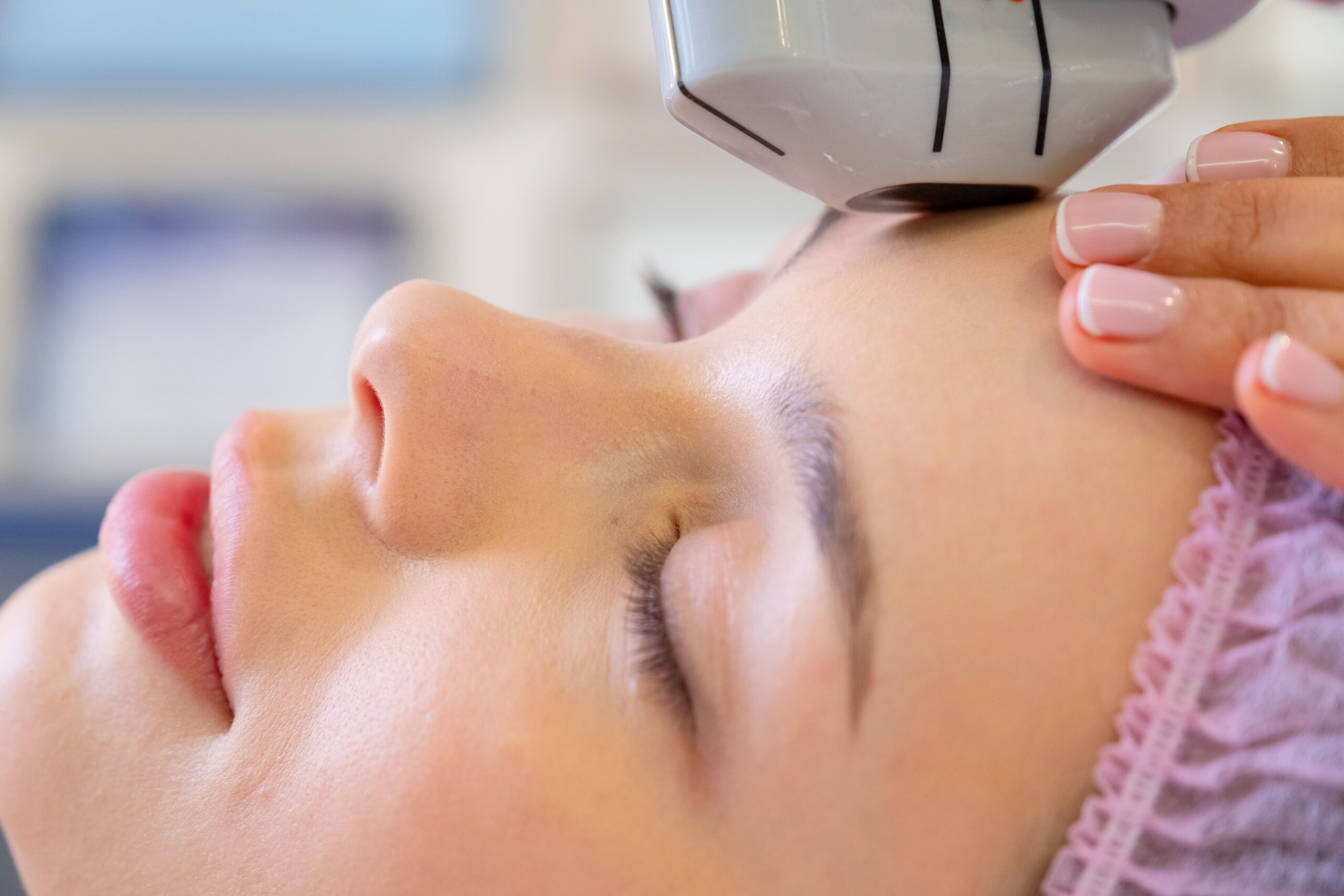
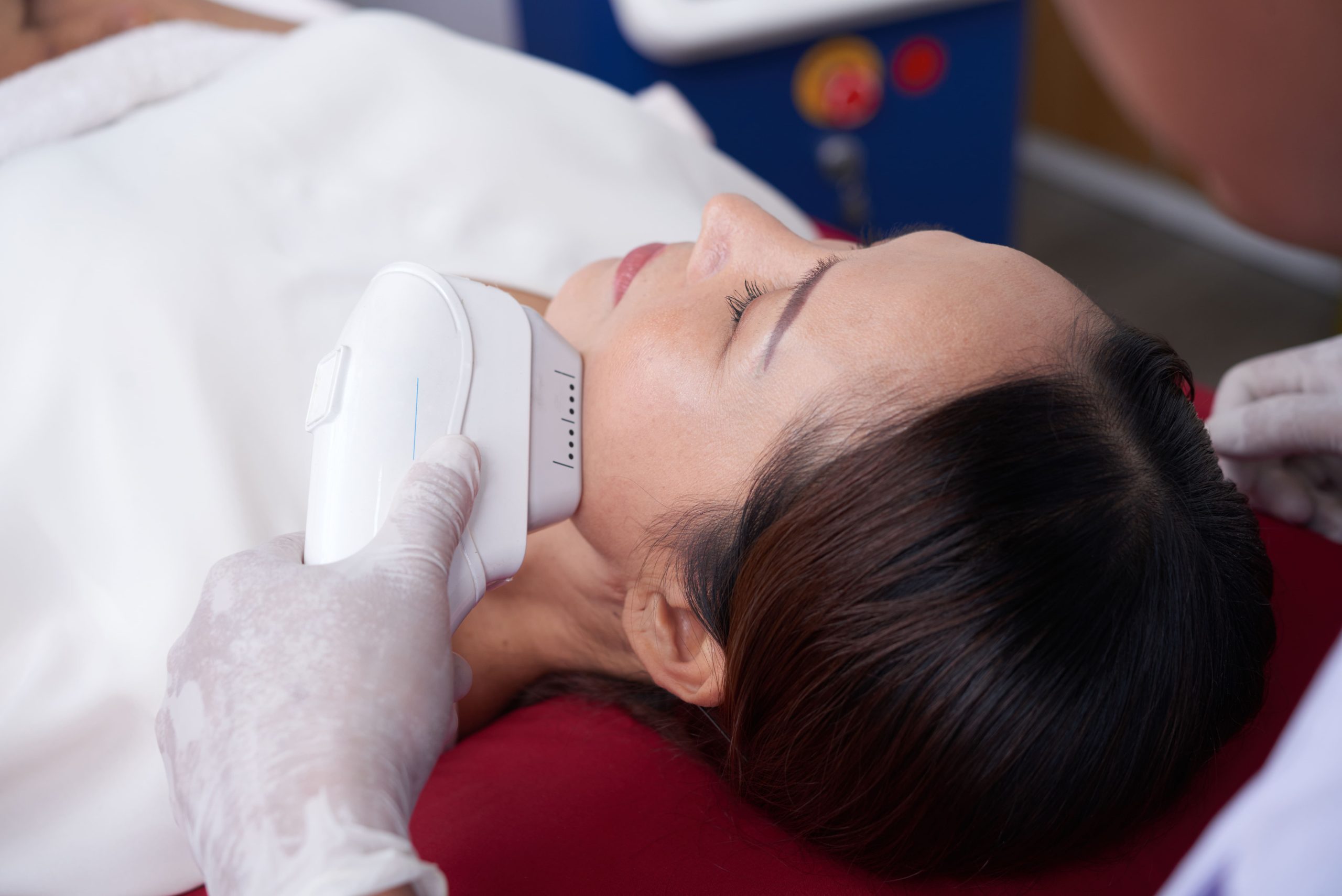
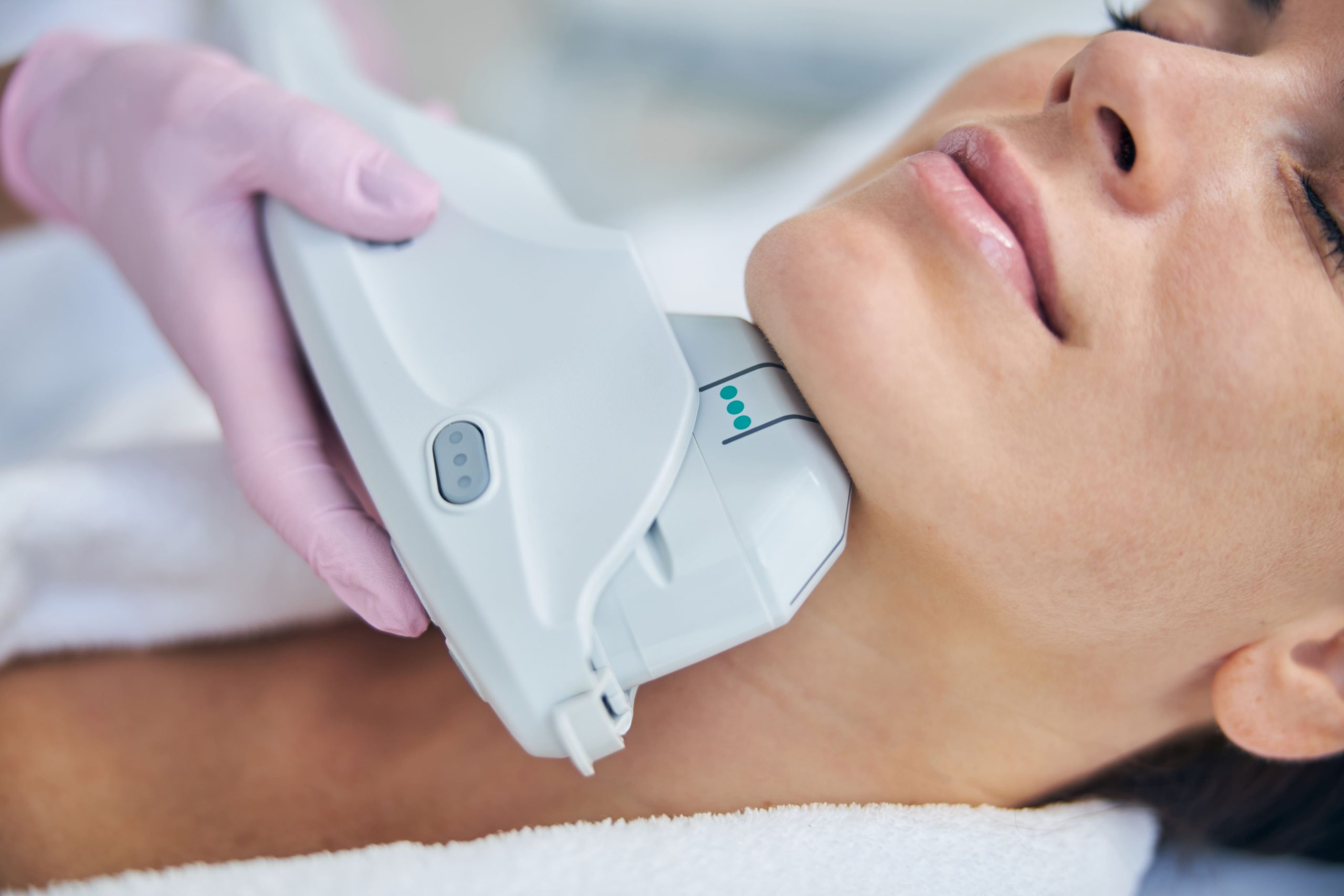
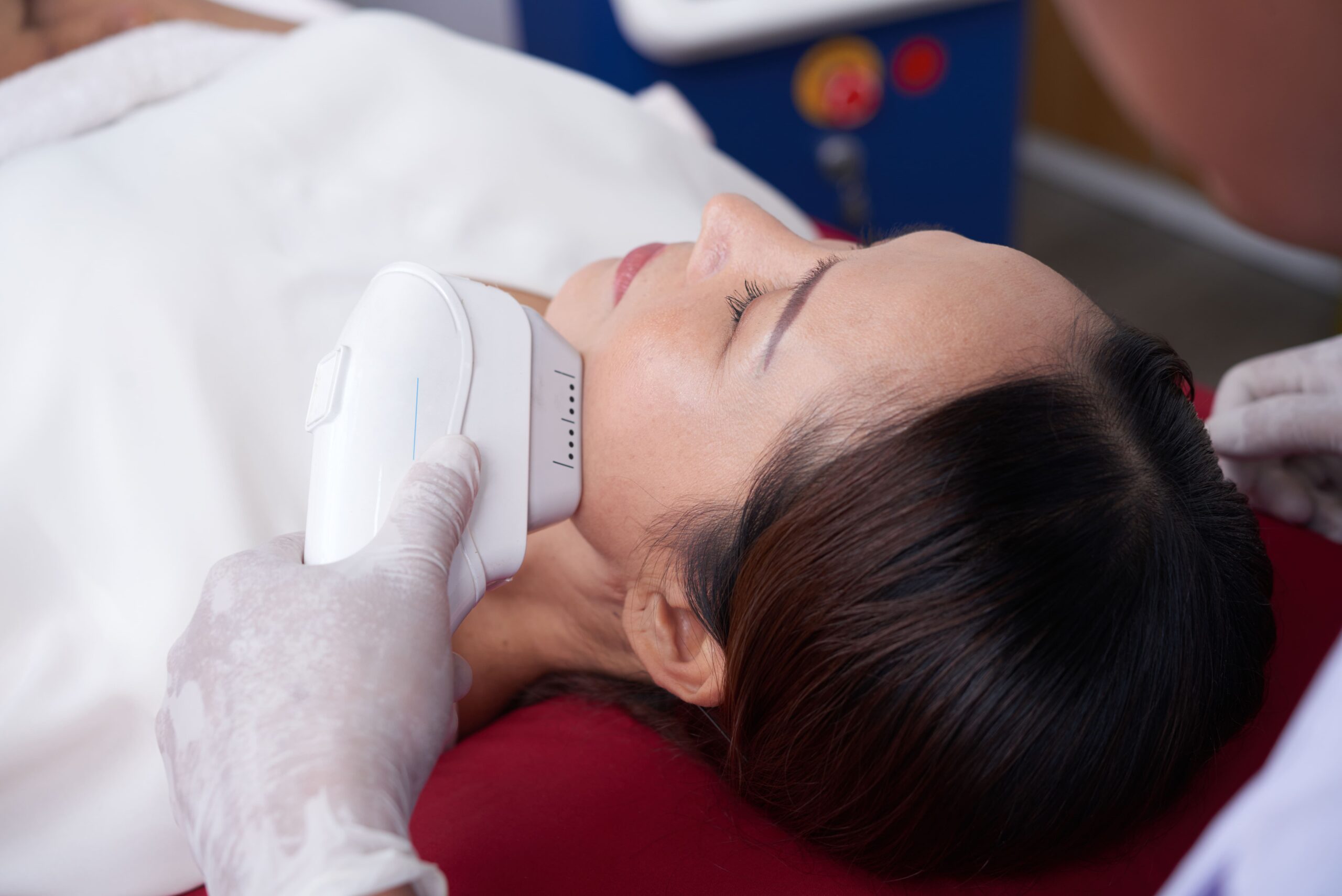
High-Intensity Focused Ultrasound (HIFU) is a non-invasive procedure that delivers thermal energy to specific depths beneath the forehead skin. This process is designed to facilitate collagen remodelling—the body’s natural way of repairing and producing collagen without disrupting the skin’s surface.
The treatment is engineered to reach the Superficial Muscular Aponeurotic System (SMAS) layer, a tissue layer that provides essential structural support, at depths of 3.0mm to 4.5mm. Additionally, practitioners may use transducers targeting the dermal layer (1.5mm) to address skin firmness more comprehensively.
Anatomical Precision
Treating the forehead requires a precise understanding of facial anatomy. The skin in this area is relatively thin and sits directly over the frontalis muscle (responsible for eyebrow movement) and the orbital rim (the bone surrounding the eyes).
HIFU technology allows for the delivery of energy along these bony contours with the aim of:
- Supporting the brow position.
- Improving the appearance of horizontal forehead lines.
For individuals concerned with both skin laxity and surface texture, a multi-depth approach may be considered. This may involve combining HIFU with other modalities, such as Radiofrequency (RF) microneedling, which utilises fine needles and radiofrequency energy to address the skin’s surface irregularities and fine lines.
How HIFU Creates Tissue Lifting
HIFU devices focus ultrasound waves to create thermal coagulation points (small areas of controlled heating) at precise depths. This works similarly to how a magnifying glass focuses sunlight. These micro-injuries occur at temperatures in an elevated range, sufficient to break down collagen fibres and initiate the wound healing cascade (the body’s natural repair process).
The body responds by producing new collagen over the following several weeks to several months. This gradually replaces damaged protein structures with fresh fibres. This neocollagenesis (production of new collagen) continues for several months post-treatment. This explains why results develop progressively rather than appearing immediately.
Forehead treatments typically use multiple transducer depths within a single session. Deeper transducers (3.0-4.5mm) target the SMAS and deep reticular dermis for lifting. Superficial transducers (1.5mm) address fine lines and skin texture in the papillary dermis (the upper layer of the dermis where fine lines form).
The Treatment Experience
Pre-Treatment Preparation
Your practitioner will cleanse the forehead and apply ultrasound gel. Some clinics apply a topical anaesthetic (numbing cream) for a period beforehand. Photographs document baseline appearance for comparison at follow-up appointments.
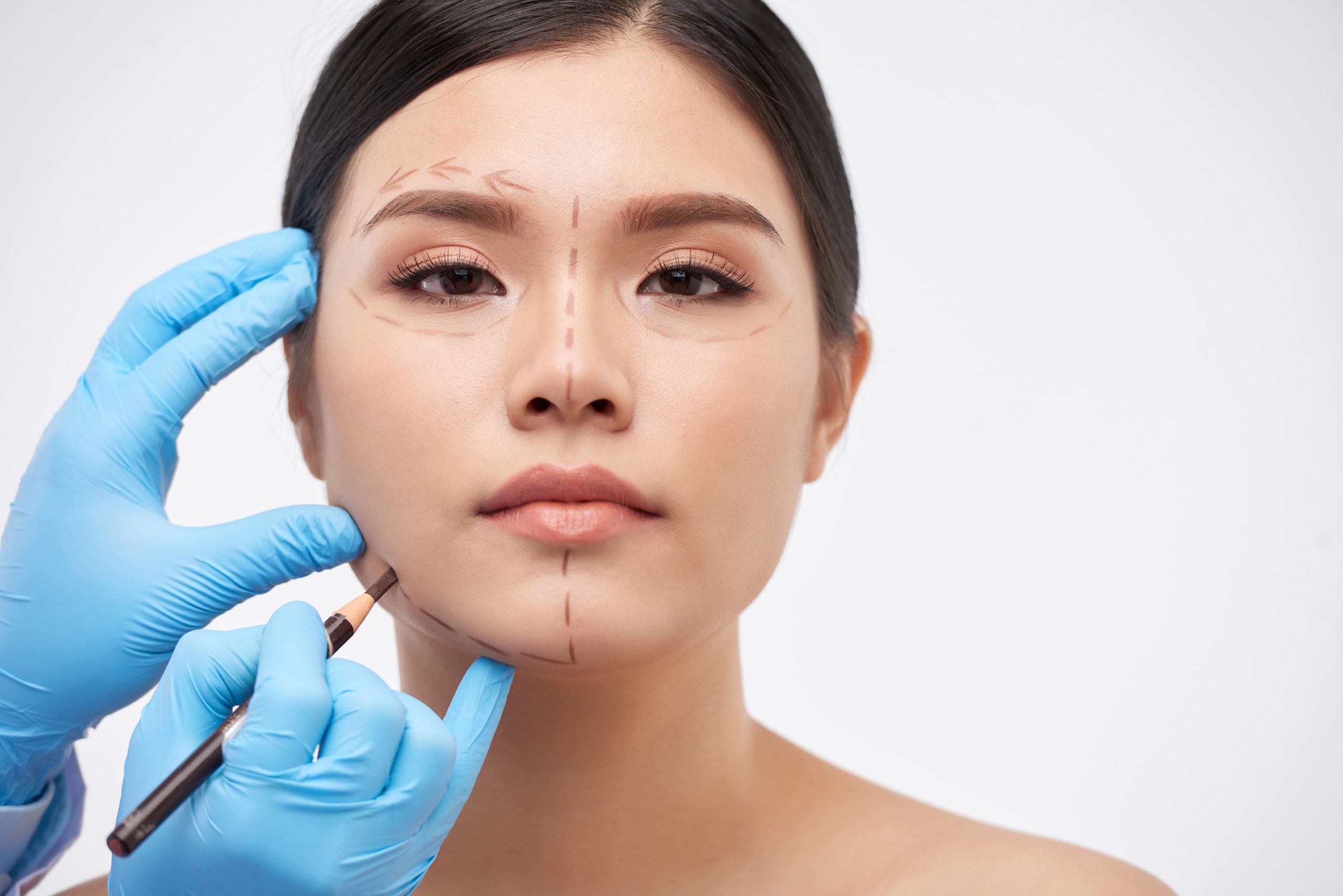
The practitioner marks treatment zones. They avoid the orbital rim and temporal arteries. Treatment planning considers forehead height, hairline position, and the location of horizontal rhytides (horizontal forehead lines) and glabellar frown lines (the vertical lines between your eyebrows).
During the Procedure
The aesthetic specialist delivers ultrasound energy in pulses. Each pulse creates a small row of thermal coagulation points beneath the skin. You’ll feel a brief, warm prickling sensation with each pulse. Everyone experiences discomfort differently, and intensity varies by treatment depth and energy level.
Forehead treatment typically involves multiple lines of focused energy. Your practitioner adjusts energy levels based on tissue response and your comfort. They monitor skin reaction throughout.
Immediate Post-Treatment
Mild erythema (redness) may appear immediately. This typically resolves within a short period. Some patients experience slight swelling around the brow area. This lasts a day or two. Tenderness when touching the forehead persists for several days in some cases.
You can apply makeup and return to normal activities immediately. Sun protection remains important during the healing phase, as with any collagen-stimulating treatment.
What Results to Realistically Expect
Initial tightening from tissue contraction may be visible immediately. This represents only a fraction of the eventual outcome. The collagen remodelling process produces gradual improvement over a period of months. Continued enhancement occurs up to several months post-treatment.
Measurable changes include:
- Brow position: Subtle elevation of the lateral brow
- Forehead smoothness: Softening of horizontal lines, particularly for fine to moderate rhytides
- Skin texture: Improved firmness and reduced crepiness
- Pore appearance: Some refinement in skin surface quality
Single treatments produce noticeable but modest results. Many patients benefit from annual maintenance sessions to sustain collagen production. Those with more significant laxity may require multiple sessions spaced several months apart.
? Did You Know?
The SMAS layer targeted by HIFU is a continuous fibromuscular sheet (a layer of tissue containing both muscle and connective fibres). It extends from the neck platysma muscle up to the frontalis and galea of the scalp. Tightening this layer creates a lifting effect because it’s physically connected to overlying skin through fibrous attachments called retaining ligaments.
HIFU Versus RF Microneedling for Forehead Concerns
Understanding when to choose HIFU versus RF microneedling for wrinkles helps set appropriate expectations. These treatments work at different depths and address distinct concerns. This makes them complementary rather than competing options.
Depth and Mechanism
HIFU reaches the SMAS layer at 3.0-4.5mm. This is deeper than any other non-surgical treatment. This depth allows tissue lifting by targeting the structural support layer. RF microneedling is a treatment where tiny needles deliver radiofrequency energy into the skin that typically penetrates a range of depths into the skin. It delivers radiofrequency energy through insulated needles to the dermis.
RF microneedling for wrinkles works well for treating the dermal layer where fine lines originate. The controlled micro-injuries (tiny punctures made by the needles) combine with thermal energy to stimulate collagen production. This improves skin texture, scarring, and pore size. The forehead responds well to RF microneedling because the relatively thin skin allows efficient energy delivery.
Treatment Selection
Choose HIFU when primary concerns are:
- Brow ptosis (sagging or drooping brow)
- Heavy upper lids from brow descent
- Loss of forehead definition
- Overall tissue laxity
Choose RF microneedling for wrinkles when addressing:
- Fine horizontal lines
- Skin texture irregularities
- Enlarged pores
- Acne scarring on the forehead
- Surface crepiness (thin, wrinkled skin texture)
Combination Approach
Many practitioners recommend both treatments in sequence. This involves HIFU for deep structural lifting followed by RF microneedling for surface refinement. This addresses forehead ageing comprehensively by lifting the underlying support structure whilst resurfacing the visible skin.
Typical protocols space treatments several weeks apart. This allows initial healing before the second procedure. The combined approach addresses both the gravitational descent (treated by HIFU) and the textural changes (addressed by RF microneedling for wrinkles) that contribute to an aged forehead appearance.
Suitability and Pre-Treatment Assessment
Understanding Treatment Suitability
HIFU forehead tightening is designed to address skin laxity and brow position concerns through deep tissue stimulation. The treatment tends to work most effectively for individuals with mild to moderate forehead laxity and skin that still retains reasonable elasticity.
Candidates who may respond well typically have:
- Mild to moderate brow descent or forehead laxity
- Horizontal forehead lines they wish to address
- Realistic expectations about non-surgical outcomes
- Preference for gradual, natural-looking improvement
Pre-Treatment Assessment
Before proceeding with HIFU forehead treatment, a thorough assessment determines suitability and establishes realistic expectations for your individual situation.
Your practitioner will cleanse the forehead and apply ultrasound gel. Photographs document baseline appearance for comparison at follow-up appointments.
The practitioner evaluates forehead height, hairline position, bone structure, and the location of horizontal rhytides (horizontal forehead lines) and glabellar frown lines (the vertical lines between your eyebrows). This assessment helps predict how your forehead tissue may respond to ultrasound energy and whether HIFU is the most appropriate approach for your concerns.
During this consultation, it’s important to inform your doctor about:
- Any medications or supplements you’re currently taking
- Existing medical conditions
- Recent aesthetic treatments (particularly neurotoxin injections, which may require waiting before proceeding with HIFU)
- Previous forehead surgery, permanent fillers, or thread lifts
This information helps ensure treatment suitability and allows for any necessary modifications to the protocol to ensure your safety and optimal outcomes.
⚠️ Important Note
If you’ve had previous forehead surgery, permanent fillers, or thread lifts, inform your practitioner during consultation. These factors affect treatment planning and may require modified protocols or alternative approaches.
Recovery Timeline and Aftercare
Days 1-3: Possible mild tenderness, possible swelling around brows, slight redness. Normal activities can resume immediately.
Days 4-7: Most immediate effects resolve. Some patients notice initial tightening. This isn’t universal.
Weeks 2-4: Skin returns to baseline as initial inflammation subsides. Some patients temporarily feel their skin looks unchanged or even slightly worse during this phase.
Months 1-3: Progressive improvement occurs as new collagen forms. Many patients notice visible changes during this period.
Months 3-6: Continued enhancement occurs as collagen matures and remodels. Final results are typically visible by a later timeframe.
Aftercare Recommendations
- Apply broad-spectrum SPF 50+ sunscreen daily
- Maintain normal skincare routine
- Keep the skin well-hydrated by applying a moisturiser, serum, and hydrating mask.
- Schedule follow-up at a later timeframe to assess results
Managing Expectations
HIFU produces real, measurable results for appropriate candidates. It’s not a surgical substitute. Patients with mild to moderate laxity typically see satisfying improvement. Those with significant brow ptosis or deep-set horizontal lines may find results more subtle compared to surgical options; however, HIFU still provides the added advantage of supporting the skin’s structural foundation non-invasively.
The treatment works well as part of a comprehensive approach. RF microneedling for wrinkles addresses complementary concerns. Neurotoxin injections (botulinum toxin treatments) prevent dynamic lines from reforming.
Annual or biannual maintenance sessions help sustain collagen production. They counteract ongoing ageing processes. Viewing HIFU as part of a long-term skin maintenance strategy rather than a one-time fix produces satisfying outcomes.
What Our Aesthetic Specialist Says
Forehead rejuvenation requires understanding each patient’s anatomy and ageing pattern. Some patients present primarily with laxity. Their skin has lost its structural support. Others have textural concerns like fine lines and rough skin surface. Many have both.
Combining HIFU with RF microneedling addresses the forehead comprehensively. HIFU lifts from below, repositioning the brow and tightening the SMAS layer. RF microneedling utilises a different mechanism to tighten the superficial and mid-layers of the skin from above, building collagen within the dermis where wrinkles typically form. This dual approach addresses forehead ageing across multiple tissue levels simultaneously.
Commonly Asked Questions
How painful is forehead HIFU compared to other facial areas?
The forehead is generally associated with minimal discomfort for many patients. While the sensation may be more noticeable than on the cheeks due to the thin skin and underlying bone, it is generally well-tolerated. Topical anaesthetic (numbing cream) significantly improves comfort, and energy levels can be adjusted based on your tolerance.
Can HIFU replace botulinum toxin for forehead lines?
They address different aspects of forehead lines. HIFU treats static lines (lines visible at rest) by tightening underlying tissue. Botulinum toxin (BTX) prevents dynamic lines (lines formed by muscle movement). Many patients benefit from both: HIFU for structural support and botulinum toxin for preventing repetitive movement patterns that create lines.
How does forehead HIFU compare to RF microneedling for wrinkles in terms of results?
HIFU lifts tissue by targeting deeper structural layers. RF microneedling for wrinkles resurfaces by stimulating collagen in the dermis. HIFU produces noticeable lifting. RF microneedling produces textural improvement. Combining both creates comprehensive forehead rejuvenation, addressing laxity and surface quality.
Will I need time off work after treatment?
Many patients return to work immediately. Mild redness resolves within hours. Any swelling is typically subtle enough to conceal with makeup if desired.
How many sessions will I need?
Single sessions produce visible results for many patients. Those with moderate laxity often benefit from multiple sessions spaced several months apart for desired clinical goals. Annual maintenance sessions help sustain collagen production long-term.
Next Steps
Forehead HIFU targets the SMAS layer for structural lifting. RF microneedling addresses dermal collagen for texture improvement. Combining both treatments provides comprehensive forehead rejuvenation.
If you’re experiencing brow descent, forehead laxity, or horizontal lines, consult a qualified aesthetic specialist to determine whether HIFU, RF microneedling, or both treatments suit your specific concerns.
Note on Clinical Standards and Regulation
In Singapore, it is important for patients to distinguish between medical-grade and salon-based HIFU systems:
- Regulatory Classification: Medical-grade HIFU systems are regulated medical devices calibrated for clinical precision. These systems are designed to reach specific tissue depths, such as the SMAS layer, with consistent energy delivery. In contrast, equipment found in beauty salons is intended for general aesthetic maintenance and operates under different power parameters.
- Professional Qualifications: In accordance with health guidelines, medical-grade HIFU procedures may only be performed by registered medical practitioners who hold a specific Certificate of Competence (COC). Non-medical grade systems are utilised by aesthetic therapists in a non-clinical setting.
- Clinical Outcomes and Pricing: Due to differences in technology, safety protocols, and professional clinical oversight, both the standard of results and the duration of effects will vary. Pricing for medical-grade HIFU reflects the clinical grade of the equipment, the doctor’s expertise, and the required medical standards of care.