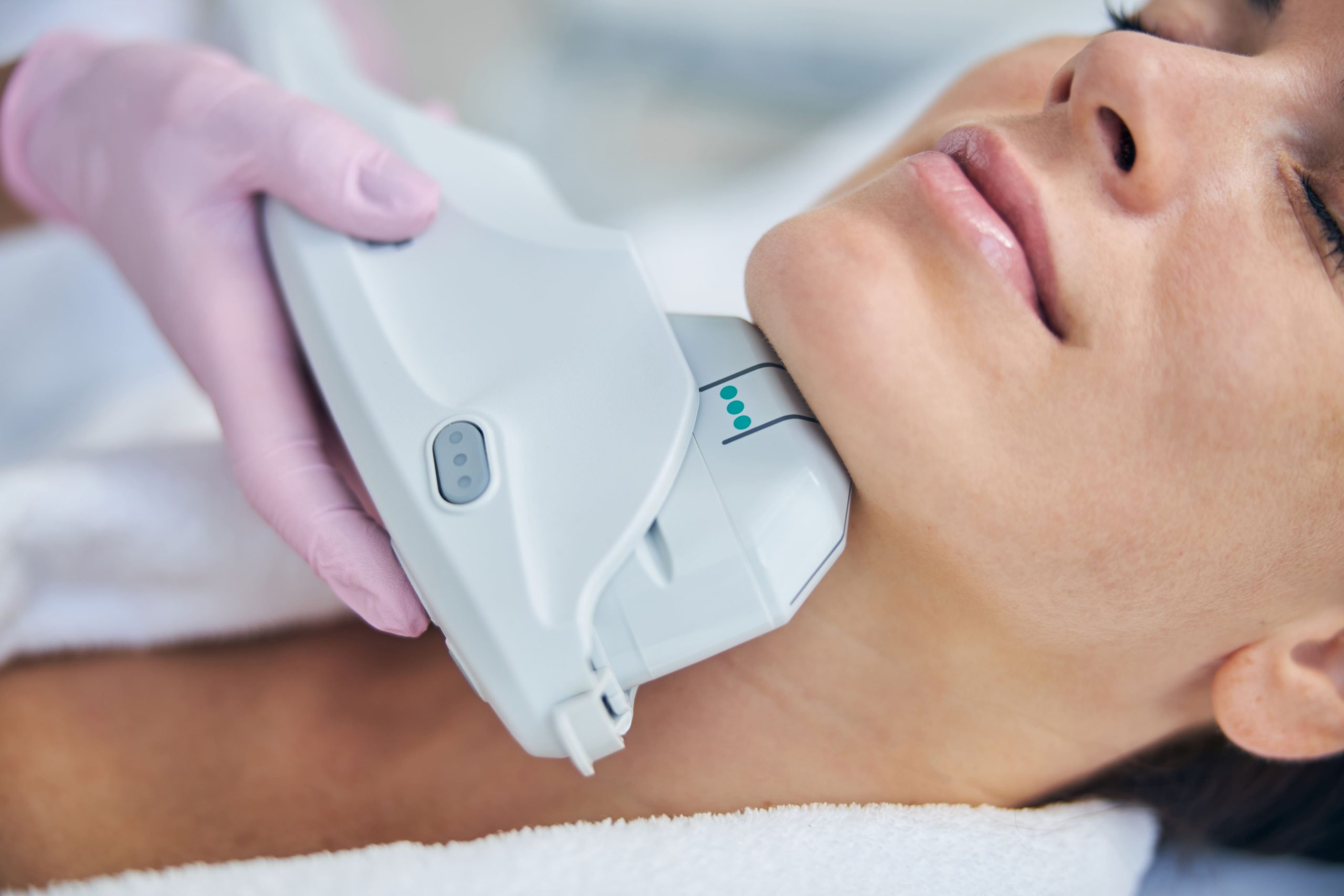
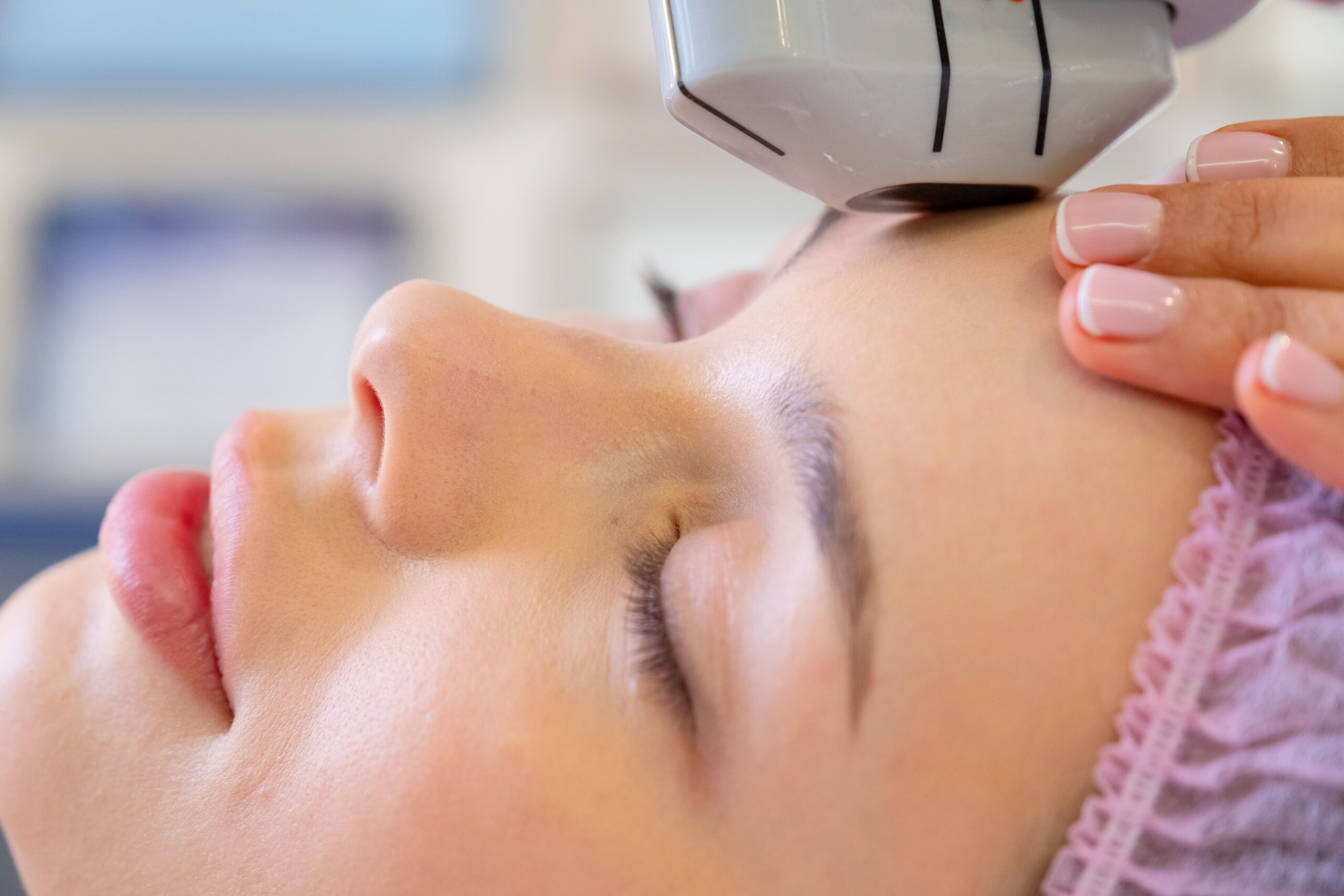
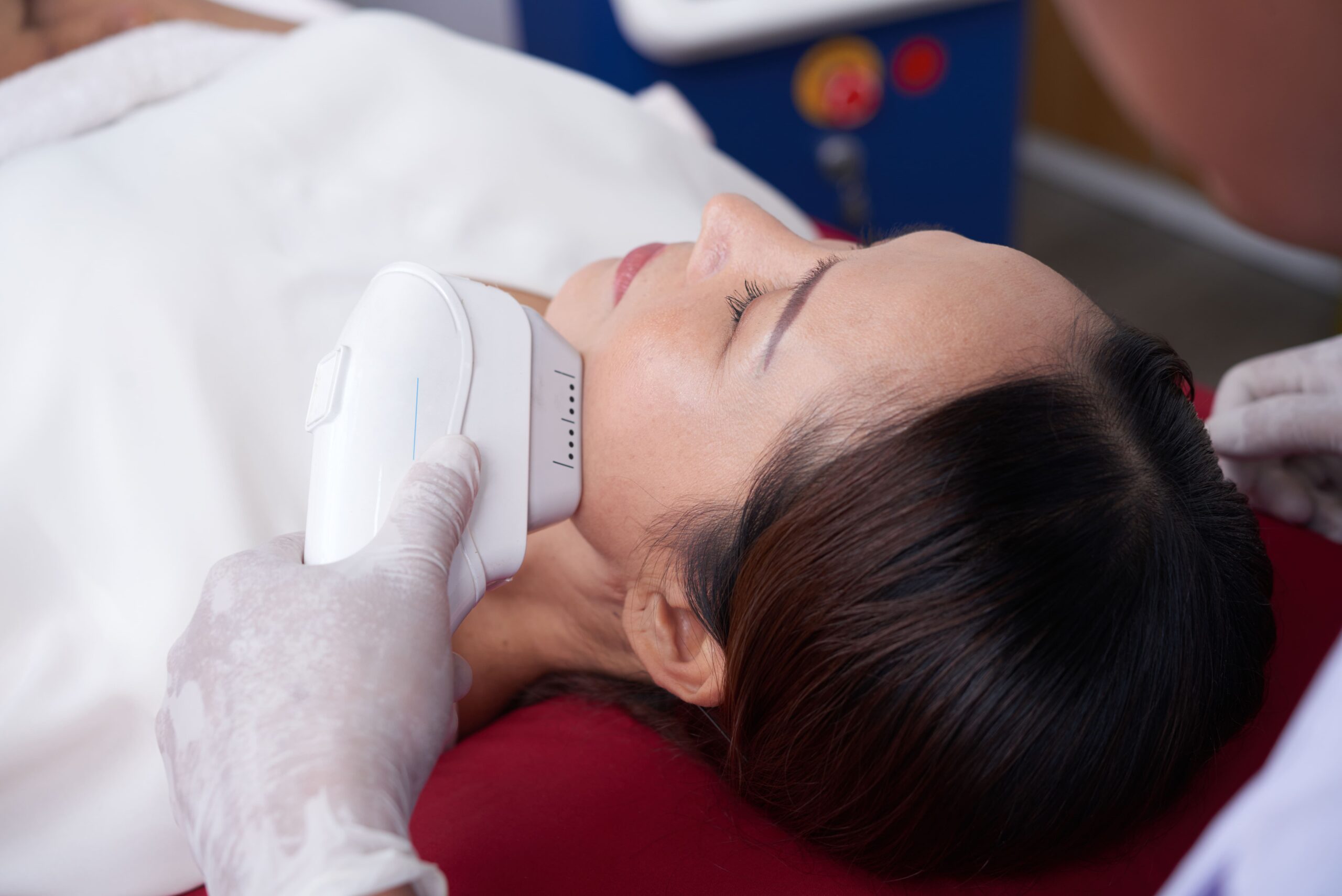
The mid-face region, which extends from the lower eyelids to the nasolabial folds, undergoes structural changes as part of the natural ageing process. These changes often involve a reduction in tissue volume and structural support, which may lead to the appearance of nasolabial folds and skin laxity. High-Intensity Focused Ultrasound (HIFU) is a non-invasive technology used to address these deep tissue layers by delivering targeted thermal energy.
HIFU technology is designed to deliver ultrasound energy to specific anatomical depths, including the Superficial Muscular Aponeurotic System (SMAS). In a non-invasive context, this energy is intended to induce thermal contraction and stimulate the body’s natural collagen production. While the SMAS is a key structural layer in facial anatomy, HIFU does not involve the surgical repositioning or removal of tissue.
How HIFU Works on Cheek Tissue
HIFU devices emit focused ultrasound waves that converge at specific points beneath the skin. These create thermal coagulation zones (small areas of controlled heat damage) at controlled depths. These micro-injuries trigger a wound healing response without disrupting the skin surface above. The technology can target three distinct tissue depths:
- Shallow depth for superficial dermis (the upper layer of skin)
- Moderate depth for deep dermis (the lower layer of skin)
- Deeper depth for the SMAS (superficial musculoaponeurotic system), the fibromuscular layer that connects facial muscles to skin, which is the same layer addressed in surgical facelifts
For cheek tightening specifically, the moderate and deeper depth transducers deliver relevant effects. The deeper depth reaches the SMAS layer overlying the cheek musculature. Collagen contraction and subsequent neocollagenesis (the production of new collagen) create a lifting foundation here. The moderate depth targets dermal collagen responsible for skin texture and surface firmness.
Treatment protocols typically deliver these points in grid patterns across the treatment area. Spacing is determined by the degree of laxity and tissue thickness.
The Mid-Face Anatomy Challenge
The cheek region presents unique treatment considerations due to its complex anatomical structure. The malar fat pad (the fat compartment that creates youthful cheek projection) sits superficially and tends to descend with age. Beneath this lies the buccal fat pad (deeper cheek fat), deep facial muscles, and the parotid gland (a salivary gland).
Several structures require careful avoidance during HIFU treatment, and medical professionals are well-trained to perform the procedure accordingly:
- Parotid duct: The tube that drains saliva from the parotid gland, running horizontally across the mid-cheek, approximately one finger-width below the zygomatic arch
- Facial nerve branches: The zygomatic and buccal branches (nerve pathways that control facial movement) traverse this region
- Bony prominences: The zygoma (cheekbone) and maxilla (upper jawbone) require adjusted energy parameters
Practitioners modify treatment density and avoid certain zones entirely. The area directly over the parotid gland receives either reduced energy or is excluded from treatment protocols. Similarly, the perioral region near the nasolabial fold requires careful depth selection to avoid targeting too superficially.
What Happens During Treatment
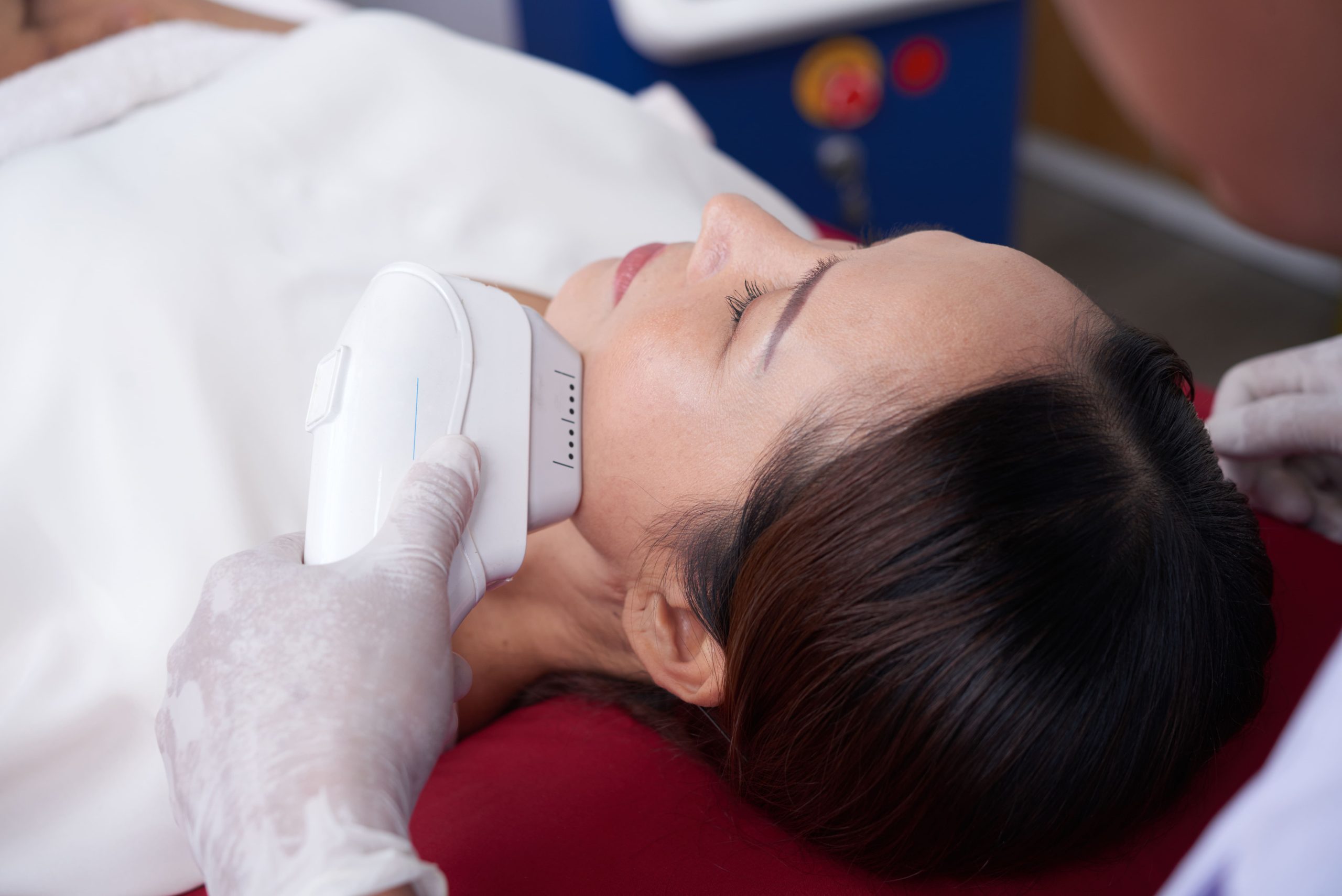
After cleansing, the practitioner applies ultrasound gel to facilitate energy transmission.
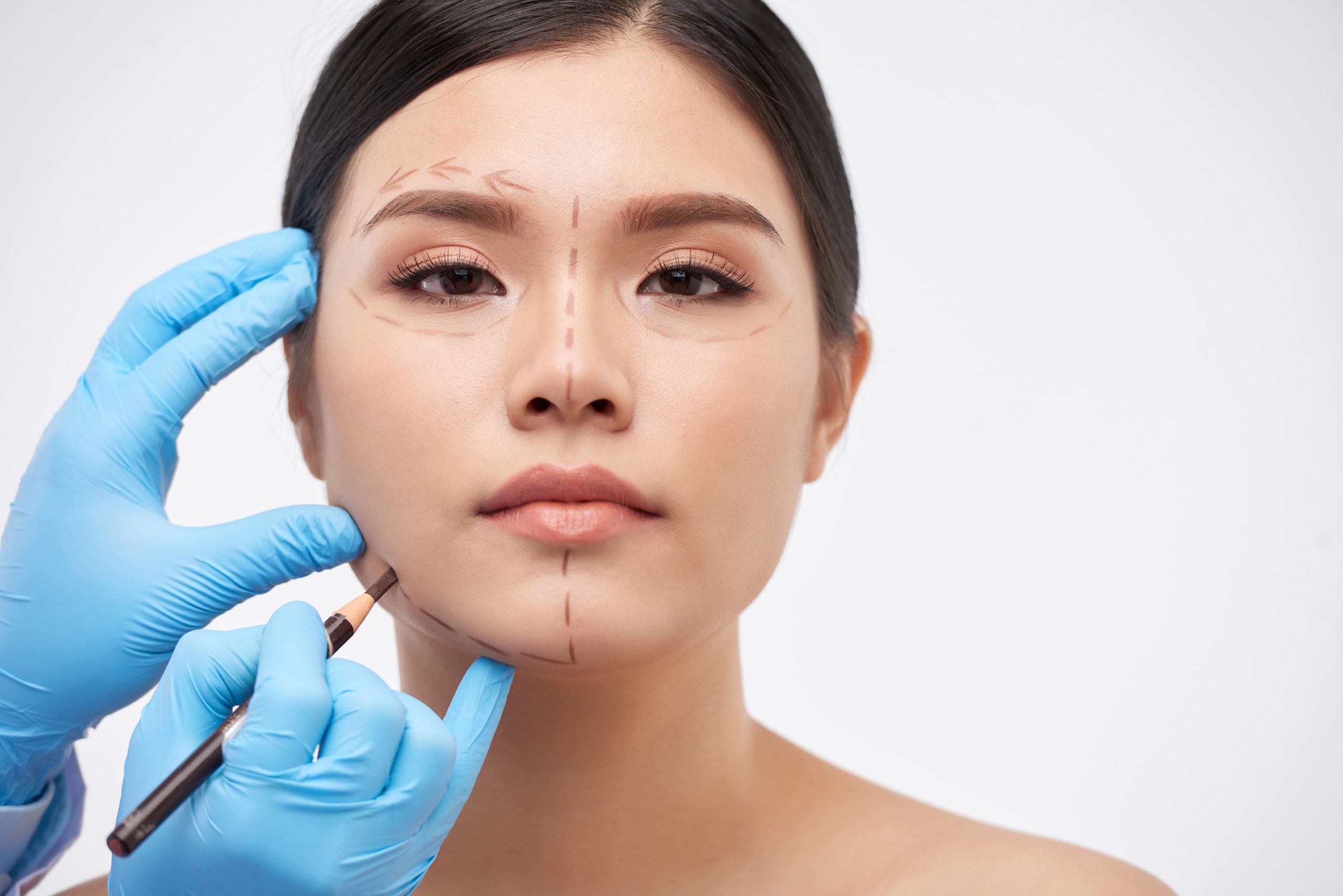
Treatment begins with mapping the cheek region and identifying anatomical landmarks. The handpiece delivers lines of focused ultrasound energy. Patients experience brief sensations of heat and pressure at each pulse. The cheek area typically requires multiple lines per side. This depends on the device and treatment intensity selected.
Discomfort levels vary considerably between individuals. Some describe mild warmth while others report significant but tolerable discomfort during energy delivery. Areas over bone tend to produce more sensation than areas over thicker soft tissue.
Immediately post-treatment, mild erythema (redness) and slight swelling are common. These effects typically resolve within hours to days. Some patients notice immediate, subtle tightening from collagen contraction.
Timeline of Results
HIFU results develop through two distinct phases. The immediate effect comes from heat-induced collagen contraction. Existing collagen fibres (the structural proteins that support skin) shorten when exposed to elevated temperatures. This provides modest initial tightening visible in some patients immediately or within the first week.
The more substantial results emerge from neocollagenesis—the production of new collagen in response to the controlled thermal injury. This process unfolds over several months. Continued improvement is possible up to six months post-treatment. Patients typically observe gradual improvement in:
- Cheek contour definition
- Reduction in mid-face laxity
- Softening of nasolabial fold depth
- Overall skin firmness in the treated area
Response times vary depending on your specific condition.
Candidates and Suitability
HIFU cheek tightening is designed to address mild to moderate facial laxity through deep tissue stimulation. Suitable candidates typically present with early jowling, loss of cheek definition, and skin that still retains reasonable elasticity (the ability to bounce back after being stretched).
Candidates who may respond well typically have:
- Mild to moderate skin laxity in the mid-face region
- Intact skin elasticity (skin rebounds when gently pinched)
- Realistic expectations about non-surgical outcomes
- Preference for gradual, natural-looking improvement
The treatment provides lifting through tissue tightening rather than volume replacement. Patients with significant volume loss may need combination approaches that address both tissue quality and volume concerns.
Pre-Treatment Assessment
Before proceeding with treatment, a comprehensive assessment determines suitability for your individual situation. Your practitioner evaluates skin laxity grade, tissue thickness, and facial anatomy to predict how your cheek tissue may respond to ultrasound energy.
During this consultation, inform your doctor about any medications or supplements you’re currently taking, as well as any existing medical conditions. This information helps ensure treatment suitability and allows for any necessary modifications to the protocol.
Baseline photographs typically document your starting point for later comparison as results develop over the following months.
While HIFU cannot replicate surgical results, it offers an option for patients who prioritise natural appearance and gradual improvement. A healthcare professional can provide personalised recommendations based on your individual anatomy and aesthetic goals.
HIFU Compared to Other Tightening Approaches
Multiple technologies address facial laxity through different mechanisms.
Radiofrequency (RF) devices heat tissue using electrical current rather than ultrasound. RF penetrates more superficially than HIFU—typically affecting the dermis rather than the SMAS. It heats tissue more diffusely rather than creating focused coagulation points. RF treatments often require multiple sessions and work well for surface texture improvement. However, they provide less deep tissue lifting than HIFU.
Thread lifts use medical-grade dissolvable sutures to physically reposition descended tissue while stimulating collagen along the thread tracks. Results appear immediately following the insertion of threads via a needle or cannula. While thread lifts focus on mechanical repositioning, HIFU addresses tissue quality and contraction.
The visible lift from threads may gradually settle over the first few months as natural facial muscle movements affect the engagement of the thread anchors. In contrast, the lifting effect from HIFU matures progressively, starting approximately one month after treatment, as it relies on internal structural strengthening rather than mechanical suspension.
Injectable fillers restore volume loss directly—a different mechanism entirely. Many patients may benefit from combining HIFU tightening with strategic filler placement. HIFU improves the tissue foundation while fillers restore lost volume in specific compartments.
? Did You Know?
The SMAS layer targeted by HIFU at deeper depths is the same tissue layer that surgeons manipulate during facelift procedures. This fibromuscular sheet connects facial muscles to skin and provides the structural foundation for lasting lift.
Treatment Protocols and Maintenance
Initial treatment protocols vary based on individual assessment. Patients with moderate laxity may benefit from a single comprehensive session. Those with milder concerns might start with a lighter treatment. Some practitioners recommend two sessions spaced several months apart for enhanced results in patients with more significant laxity.
Maintenance approaches depend on individual response and ageing patterns. A healthcare professional will establish specific goals based on individual factors. These include age, skin quality, and overall facial ageing progression. Common protocols include:
- Annual maintenance: Single session yearly to maintain results
- Graduated approach: More intensive initial treatment followed by lighter maintenance sessions
- Combination protocols: HIFU alternated with other modalities throughout the year
The optimal maintenance schedule emerges through observation of individual response over time.
Post-Treatment Care
HIFU requires minimal downtime compared to surgical alternatives. Some considerations apply:
- Mild swelling or tenderness may persist for several days
- Sun protection remains important during the healing period
- You can typically apply makeup the same day
- You can usually resume strenuous exercise within a short period
The treated area may feel slightly tender to the touch for the first few days. Some patients report transient numbness or tingling. This resolves spontaneously. Rare side effects include temporary bruising if small vessels are affected or prolonged tenderness in sensitive areas.
Realistic Expectations
HIFU delivers measurable but modest improvements compared to surgical intervention. The gradual onset of results means improvement integrates naturally with the patient’s appearance rather than creating obvious change.
The treatment works for:
- Maintaining facial contours in patients not ready for surgery
- Extending intervals between surgical procedures
- Improving tissue quality as part of combination treatments
- Providing options for patients who cannot undergo surgery
Combining HIFU with Other Treatments
Many practitioners incorporate HIFU within comprehensive treatment plans. Common combinations include:
- HIFU + RF Microneedling: HIFU addresses deep tissue laxity while RF microneedling (a procedure that uses tiny needles to create controlled micro-injuries while delivering radiofrequency energy) improves rolling scars (wave-like indentations in the skin), texture irregularities, and superficial skin quality. RF microneedling rolling scars requires multiple sessions and works at shallower depths. This makes it complementary rather than redundant with HIFU’s deep tissue effects.
- HIFU + Dermal Fillers: Tightening improves the tissue foundation while fillers restore specific volume deficits (areas where natural fat has been lost). Timing typically involves HIFU first, with filler assessment once tissue changes have developed.
- HIFU + Skin Boosters: Hydration treatments (injectable products that improve skin moisture and texture) improve skin quality at superficial levels while HIFU works on structural support below.
The specific combination and sequencing depend on individual concerns, budget considerations, and tolerance for multiple procedures.
When to Seek Professional Help
- Loss of cheek definition or flattening of the mid-face
- Deepening nasolabial folds
- Early jowl formation along the jawline
- Skin that appears to be descending from its previous position
- General loss of facial firmness despite consistent skincare
Commonly Asked Questions
How painful is HIFU cheek treatment?
Discomfort levels vary significantly between individuals. Patients typically describe sensations of heat, pressure, or a tolerable, brief, sharp sensation during energy delivery. Areas located over bone often produce more sensation compared to areas with thicker soft tissue. This sensation is intermittent—occurring only during active energy pulses—and typically subsides immediately after the pulse is completed.
When will I see results from cheek HIFU?
Some patients notice subtle immediate tightening from collagen contraction. However, the majority of results develop over several months as new collagen forms in response to the treatment. Continued improvement can occur up to six months post-treatment.
Can HIFU replace a facelift?
While HIFU does not replicate the transformative results of surgery, modern aesthetic trends have shifted toward a more natural appearance rather than drastic surgical changes. As a cost-effective, non-invasive option, HIFU has become a popular choice for those looking to manage the signs of an ageing face and age gracefully without the recovery time associated with ‘under the knife’ procedures.
How many HIFU sessions do I need for cheek tightening?
Many patients achieve desired improvement from a single comprehensive session. Those with more significant laxity may benefit from two sessions spaced several months apart. Maintenance sessions—typically annually—help preserve results over time. A healthcare professional will set a treatment plan tailored to your specific degree of laxity and treatment goals.
Are there any long-term side effects?
HIFU has been used for facial tightening for over a decade with an established safety profile. Serious complications are rare when qualified healthcare professionals with appropriate anatomical knowledge perform the treatment. Temporary effects like swelling, tenderness, and occasional numbness resolve within days to weeks.
Next Steps
HIFU offers a non-surgical pathway to improving cheek firmness for mild to moderate laxity. It works either as a standalone treatment or combined with other modalities like RF microneedling for comprehensive facial rejuvenation. Assessment with a qualified healthcare professional determines whether HIFU suits your specific anatomy and concerns, and whether combination approaches might enhance your results.
If you’re experiencing mid-face laxity, loss of cheek definition, or early jowl formation, consult a qualified aesthetic specialist to discuss whether HIFU or combination treatments are appropriate for your individual concerns.
Note on Clinical Standards and Regulation
In Singapore, it is important for patients to distinguish between medical-grade and salon-based HIFU systems:
- Regulatory Classification: Medical-grade HIFU systems are regulated medical devices calibrated for clinical precision. These systems are designed to reach specific tissue depths, such as the SMAS layer, with consistent energy delivery. In contrast, equipment found in beauty salons is intended for general aesthetic maintenance and operates under different power parameters.
- Professional Qualifications: In accordance with health guidelines, medical-grade HIFU procedures may only be performed by registered medical practitioners who hold a specific Certificate of Competence (COC). Non-medical grade systems are utilised by aesthetic therapists in a non-clinical setting.
- Clinical Outcomes and Pricing: Due to differences in technology, safety protocols, and professional clinical oversight, both the standard of results and the duration of effects will vary. Pricing for medical-grade HIFU reflects the clinical grade of the equipment, the doctor’s expertise, and the required medical standards of care.