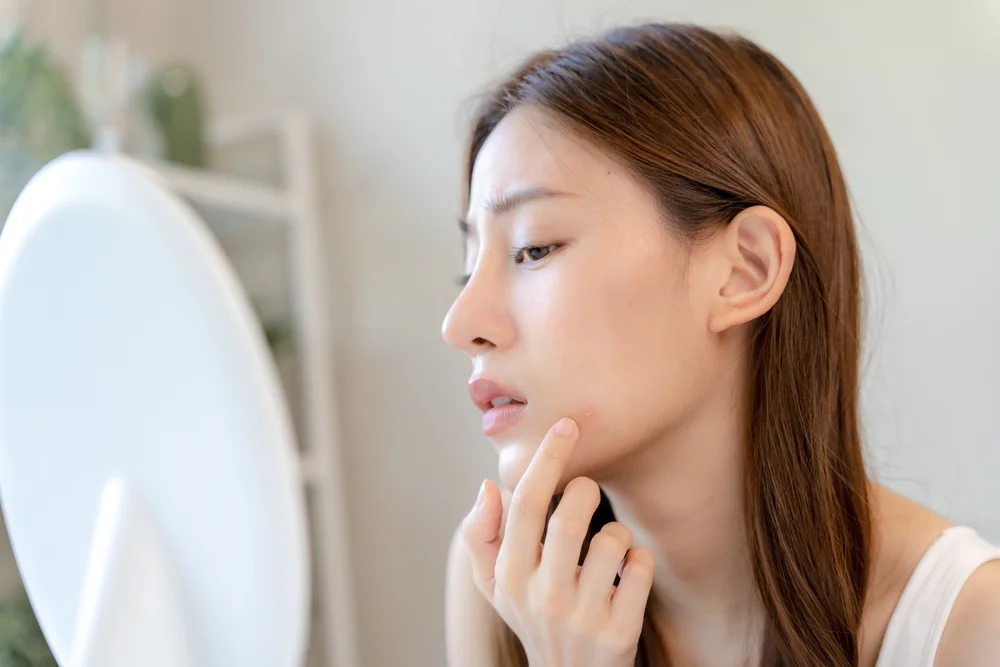
Black pigmentation appears as dark patches on facial skin when melanocytes produce excess melanin in concentrated areas. These patches range from light brown to deep black, affecting the forehead, cheeks, upper lip, and chin. Unlike temporary discoloration from acne or injuries, black pigmentation develops gradually and persists without treatment.
Melanin production increases through various triggers including UV exposure, hormonal fluctuations, post-inflammatory responses, and genetic factors. The depth of pigmentation determines treatment approach – epidermal pigmentation sits in the skin’s upper layers and responds well to topical treatments, while dermal pigmentation extends deeper and requires laser intervention.
Types of Black Facial Pigmentation
Melasma
Melasma creates symmetrical brown to greyish-brown patches across the cheeks, bridge of the nose, forehead, and upper lip. This condition affects women more frequently than men, particularly during pregnancy or while taking oral contraceptives, and is commonly assessed at a medical aesthetic clinic in Singapore. The patches darken with sun exposure and may lighten during winter months.
Hormonal influences trigger melasma through estrogen and progesterone fluctuations. The condition involves both epidermal and dermal pigmentation, making complete resolution challenging. Melasma patches have irregular borders and vary in size from small spots to large confluent areas covering significant facial regions.
Post-Inflammatory Hyperpigmentation (PIH)
PIH develops after skin injury or inflammation, leaving dark marks where acne, eczema, or wounds previously existed. The discoloration appears flat against the skin surface, distinguishing it from active acne or scarring. PIH affects all skin types but occurs more frequently and severely in darker skin tones.
The pigmentation intensity correlates with the original inflammation severity. Deep cystic acne produces darker, longer-lasting marks than superficial pimples. PIH can persist for months or years without treatment, particularly in individuals with Fitzpatrick skin types IV-VI.
Solar Lentigines (Age Spots)
Solar lentigines present as well-defined brown to black spots on sun-exposed facial areas. These flat lesions develop after years of cumulative UV damage, appearing predominantly on the cheeks, temples, and forehead. Unlike freckles, solar lentigines maintain consistent color year-round and don’t fade without treatment.
The spots range from 5mm to 15mm in diameter, sometimes coalescing into larger patches. Solar lentigines contain increased melanocytes and melanin within the basal layer of the epidermis. Their appearance often coincides with other signs of photoaging including fine lines and skin texture changes.
Medical-Grade Topical Treatments
Hydroquinone Formulations
Hydroquinone works by inhibiting tyrosinase enzyme activity in melanocytes. Prescription formulations contain 4% hydroquinone, double the concentration of over-the-counter versions. Treatment typically shows initial results within 4-6 weeks, with significant improvement by 12 weeks.
Application requires precise technique – a thin layer applied only to pigmented areas, avoiding surrounding normal skin. Hydroquinone works synergistically with tretinoin and corticosteroids in triple combination creams, addressing multiple pigmentation pathways simultaneously. Treatment cycles alternate between active use and maintenance phases to prevent ochronosis, a paradoxical darkening that can occur with prolonged use.
Tretinoin and Retinoid Therapy
Tretinoin accelerates cellular turnover, bringing pigmented cells to the surface for faster elimination. Starting concentrations typically range from 0.025% to 0.05%, with gradual increases based on skin tolerance. The medication also enhances penetration of other lightening agents when used in combination protocols.
Initial irritation often occurs during the first 2-4 weeks, manifesting as redness, peeling, and increased sensitivity. This reaction indicates the medication’s effectiveness in stimulating cellular renewal. Proper moisturization and sun protection minimize these effects while maintaining treatment efficacy.
Tranexamic Acid Applications
Tranexamic acid disrupts melanin synthesis through plasmin inhibition, offering a unique mechanism for treating stubborn pigmentation. Topical formulations contain 2-5% tranexamic acid, often combined with niacinamide or kojic acid for enhanced results. This ingredient particularly benefits melasma patients who haven’t responded to traditional treatments.
The medication applies morning and evening to clean skin, followed by moisturizer and sunscreen during daytime use. Results emerge gradually over 8-12 weeks, with continued improvement through 6 months of consistent application.
Professional Laser Treatments
Q-Switched Nd:YAG Laser
Q-switched Nd:YAG lasers deliver high-energy pulses in nanoseconds, fragmenting melanin particles for natural elimination by the body’s immune system. The 1064nm wavelength penetrates deeply while minimizing epidermal damage, making it suitable for darker skin types. Treatment sessions occur every 3-4 weeks, with most patients requiring 6-10 sessions for optimal results.
During treatment, patients experience a snapping sensation as the laser targets pigmented areas. Immediate whitening or greyish discoloration indicates successful melanin disruption. Post-treatment care includes avoiding sun exposure and applying prescribed recovery creams to prevent PIH.
Pico Laser Technology
Pico lasers deliver ultra-short pulses measured in picoseconds, creating photoacoustic effects that shatter pigment particles more efficiently than traditional nanosecond lasers. This technology reduces heat accumulation in surrounding tissues, lowering PIH risk and enabling treatment of previously challenging pigmentation types.
The fractional handpiece creates microscopic treatment zones, stimulating collagen remodeling alongside pigment reduction. This dual action improves overall skin texture while addressing black pigmentation concerns. Recovery involves minimal downtime, with mild redness resolving within hours.
Fractional CO2 Laser
Fractional CO2 lasers create controlled micro-injuries in the skin, prompting regeneration of healthier, evenly pigmented tissue. This ablative approach suits deeper pigmentation and provides simultaneous skin resurfacing benefits. Treatment intensity adjusts based on pigmentation depth and patient downtime tolerance.
Post-treatment healing requires 5-7 days, during which the skin develops a bronzed appearance before peeling reveals renewed skin beneath. Proper wound care prevents infection and ensures optimal results. Most patients achieve significant improvement with 1-3 sessions spaced 6-8 weeks apart.
Chemical Peel Solutions
Glycolic Acid Peels
Glycolic acid penetrates efficiently due to its small molecular size, exfoliating pigmented cells while stimulating collagen production. Professional peels use 30-70% concentrations, far exceeding home-use products. The treatment begins with lower concentrations, gradually increasing based on skin response and pigmentation severity.
Peeling occurs 2-3 days post-treatment, revealing brighter skin beneath. Monthly sessions over 4-6 months typically yield optimal results. Between professional treatments, home-care products containing 8-10% glycolic acid maintain improvements.
TCA (Trichloroacetic Acid) Peels
TCA peels penetrate to the papillary dermis, addressing deeper pigmentation unreachable by superficial peels. Concentrations range from 15-35%, with higher percentages reserved for severe pigmentation under experienced practitioner guidance. The controlled injury prompts complete epidermal renewal, eliminating pigmented cells.
Application technique determines treatment depth – multiple layers increase penetration. Frosting indicates protein coagulation and endpoint achievement. Recovery involves 7-10 days of peeling and redness, requiring strict sun avoidance and gentle skincare.
Combination Peel Protocols
Modern peel formulations combine multiple acids for synergistic effects. Jessner’s solution (salicylic acid, lactic acid, and resorcinol) followed by TCA application enhances penetration and results. Other combinations include kojic acid with lactic acid or mandelic acid with salicylic acid.
These protocols address various pigmentation aspects simultaneously – exfoliation, melanin inhibition, and cellular renewal. Treatment customization based on skin type and pigmentation characteristics optimizes outcomes while minimizing complications.
Combining Treatments for Enhanced Results
Sequential treatment protocols maximize results by targeting pigmentation through multiple mechanisms. A typical combination approach begins with topical preparation using tretinoin and hydroquinone for 4-6 weeks, priming the skin for professional treatments.
Laser sessions alternate with chemical peels at 2-week intervals, maintaining consistent cellular turnover while avoiding over-treatment. This approach prevents the plateauing often seen with single-modality treatments. Between professional sessions, medical-grade topicals continue working at the cellular level.
Maintenance protocols prevent pigmentation recurrence through quarterly professional treatments and daily topical applications. Sun protection remains non-negotiable throughout all treatment phases, as UV exposure can reverse months of progress within days.
What Our Aesthetic Doctor Says
“Black pigmentation requires patience and consistency for successful treatment. Many patients expect immediate results, but melanin reduction occurs gradually over several months. I customize treatment protocols based on pigmentation type, depth, and individual skin characteristics.
Professional treatments jumpstart the lightening process, while medical-grade topicals maintain and enhance results between visits. Sun protection isn’t optional – it’s fundamental to preventing new pigmentation while treating existing patches.
For melasma patients, I emphasize realistic expectations. Complete clearance may not be achievable, but significant improvement transforms skin appearance. Hormonal influences mean maintenance treatments continue indefinitely for many patients.”
Putting This Into Practice
- Apply prescribed topical treatments to clean, dry skin in thin layers, focusing only on pigmented areas to prevent irritation of normal skin
- Schedule professional treatments during periods of minimal sun exposure, planning important events at least 2 weeks after aggressive procedures
- Document your pigmentation with monthly photos under consistent lighting to track progress objectively
- Rotate between different treatment modalities every few months to prevent tolerance and maintain steady improvement
- Establish a simplified morning routine incorporating treatment products, moisturizer, and broad-spectrum sunscreen for consistency
When to Seek Professional Help
- Pigmentation appears suddenly or spreads rapidly across facial areas
- Dark patches have irregular borders or multiple colors within single lesions
- Over-the-counter products show no improvement after 12 weeks of consistent use
- Pigmentation returns darker after initial lightening attempts
- Skin becomes increasingly sensitive or develops persistent redness during self-treatment
- Previous treatments caused scarring or worsened pigmentation
Commonly Asked Questions
How long before I see results from professional pigmentation treatments?
Initial improvements typically appear after 2-3 treatment sessions, with significant results visible by 6-8 weeks. Complete treatment courses span 3-6 months depending on pigmentation severity and chosen modalities. Maintenance treatments every 3-4 months prevent recurrence.
Can pigmentation return after successful treatment?
Pigmentation can recur, particularly melasma triggered by hormonal factors or sun exposure. Daily sunscreen use, regular maintenance treatments, and consistent topical applications minimize recurrence risk. Most patients maintain results with quarterly professional treatments.
Which treatment works fastest for black pigmentation?
Laser treatments typically show the fastest initial results, with visible lightening after 1-2 sessions. However, lasting results require combination approaches. Chemical peels provide gradual but steady improvement, while topical treatments work continuously between professional sessions.
Is numbing cream necessary for laser pigmentation treatments?
Most patients tolerate pigmentation lasers without numbing cream, describing the sensation as rubber band snaps. Sensitive areas like the upper lip may benefit from topical anesthetic applied 30 minutes before treatment. Your practitioner adjusts settings based on comfort levels.
Can I treat pigmentation if I have sensitive skin?
Sensitive skin requires modified protocols starting with lower concentrations and gentler modalities. Beginning with mild chemical peels or low-energy laser settings allows skin acclimatization. Barrier repair products used alongside treatments minimize irritation while achieving results.
Next Steps
Successfully treating black pigmentation on the face requires professional assessment to identify the most effective treatment combination for your specific skin condition. Medical-grade pigmentation treatment in Singapore offers targeted solutions that achieve results beyond what over-the-counter products can deliver.
If you’re experiencing persistent facial pigmentation as described, our MOH-accredited aesthetic doctors provide comprehensive evaluation and customised treatment protocols designed to restore clear, even-toned skin.