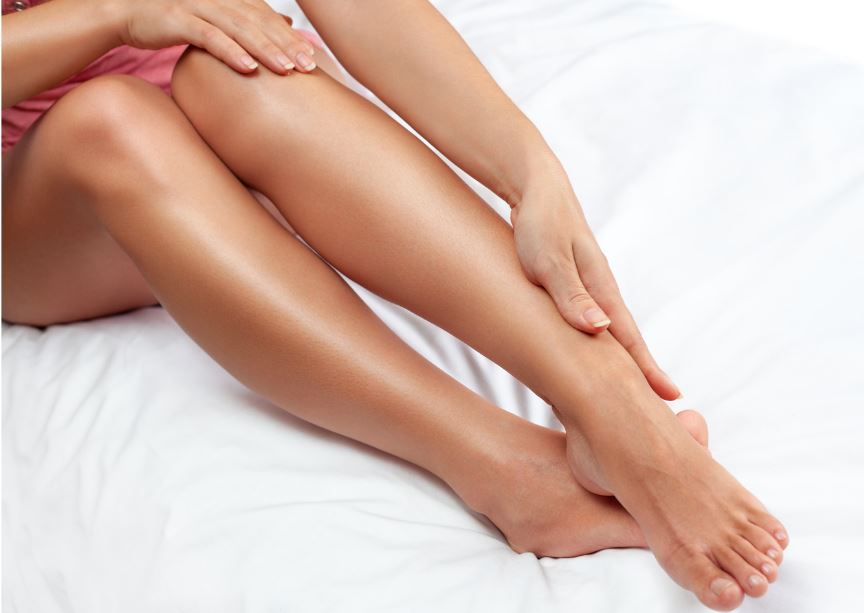
Scars on the legs can be a source of discomfort and self-consciousness, particularly in a place like Singapore where the climate often calls for lighter clothing. Understanding the nature of scarring and the options available for treatment is the first step towards addressing such concerns.
In this guide, we’ll look at why scars form, particularly on the legs, and outline the various types of scars you might encounter. We’ll then walk through a range of treatment options available, discussing their effectiveness, safety, and what you can expect during the treatment process. By the end, you should have a clearer picture of how to approach scar reduction with confidence.
Scars are evidence of the body’s natural healing process, marking where skin tissue has been wounded and subsequently healed. As part of the healing process, the body weaves collagen fibres to seal the wound, which forms a scar. This new tissue has a distinct structure, often resulting in a mark that stands out from the surrounding skin. These marks are not just physical tokens of past injuries but also tell-tales of the body’s remarkable ability to heal itself.
Why Do Legs Scar Easily?
Legs are especially vulnerable to scarring, and this can be attributed to several factors. The skin on the legs is generally tougher, which, although more resilient, can lead to more pronounced scarring during the repair process. This toughness, coupled with the substantial surface area of the legs, means that scars are often more visible.
Additionally, the frequent movement and skin tension around joints such as the knees increase the likelihood of thicker scar formation. It’s also worth noting that genetics play a significant role in how our skin scars, some individuals are more predisposed to scarring, a trait that can often be observed within families.
Types of Scars on Legs
Scars are a testament to the skin’s ability to heal after injury, but they can vary widely in appearance and texture. On the legs, you might encounter:
Atrophic Scars
Atrophic scars leave a hollow in the skin’s surface, often the aftermath of skin conditions like acne or the marks left by chickenpox. These indented scars occur when the skin loses its underlying support, resulting in a pitted look.
Hypertrophic Scars
These are the thick, raised scars that remain within the perimeters of the initial injury. They may arise from various types of skin trauma including burns or surgical incisions, and while they are prominent, they don’t spread to surrounding skin.
Keloid Scars
Keloid scars are an overgrowth of tissue that spills over the original wound, creating a raised area on the skin that can be much larger than the initial injury. These scars can appear darker or redder than the surrounding skin and are more commonly seen in individuals with darker skin tones.
Contracture Scars
Burns on the legs can result in contracture scars, which cause the skin to tighten and pull together. These scars can go deeper, affecting muscles and nerves, and may restrict movement due to the tightening of the skin.
Managing leg scars often involves a combination of treatments tailored to the individual needs of the skin and scar type. Here’s a look at some of the most proficient methods:
Steroid Injections
Injections containing corticosteroids can flatten and soften the thick, raised scars known as keloids or hypertrophic scars. These are often used in a series, either alone or in conjunction with other treatments, to make scars less noticeable.
Laser Therapy
Laser therapy is an effective treatment for leg scars, as it uses focused light to improve skin texture and promote the regeneration of skin cells. This process helps in forming new collagen, which can diminish the visibility of scars and blend them into the surrounding skin. For individuals considering laser treatment in Singapore, Glowwis Aesthetic & Medical Clinic is one of the facilities where such services are available, focusing on the improvement of skin texture.
Cryotherapy
Cryotherapy is a targeted treatment that utilises extreme cold, typically through liquid nitrogen, to destroy scar tissue on the legs. It’s particularly adept at treating small, defined scars by freezing the cells, causing them to die and detach from the skin. The procedure is swift, causes minimal discomfort, and is selective enough to leave surrounding tissues intact. This method is a practical choice for those seeking a non-surgical solution with a quick recovery period.
Surgical Procedure
For more severe scarring, surgical options such as excision, skin grafts, or laser surgery may be considered. These methods are typically reserved for scars that impair movement or are not responsive to less invasive treatments. Surgery, however, comes with risks such as infection and may sometimes lead to more noticeable scarring, and is generally considered a last resort.
Dermal Fillers
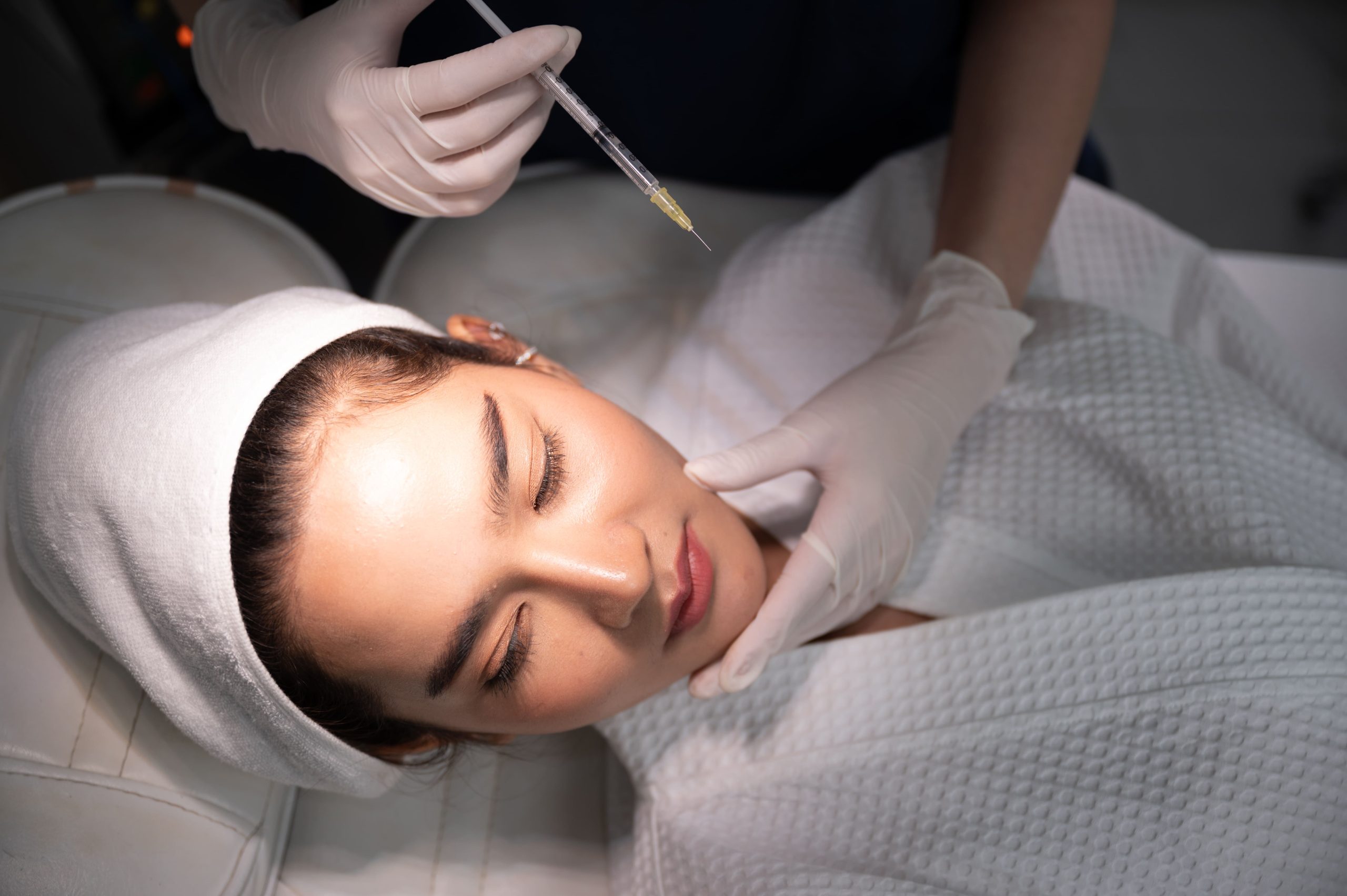
Dermal fillers are a non-surgical option to smooth out atrophic scars, which present as depressions in the skin. By injecting biocompatible materials beneath the scar, they restore volume and create a more even skin surface. The effects of fillers are immediate, though temporary, and the procedure may need to be repeated to maintain results. They are a suitable choice for individuals looking to quickly improve the texture of their scarred skin with minimal downtime.
Chemical Peels
Chemical peels use specific acidic solutions to remove the top layers of the skin, prompting the emergence of new and smoother skin. This method is particularly beneficial for mild scarring, promoting an even skin tone and texture through chemical exfoliation.
Microneedling
This innovative procedure involves tiny needles that puncture the skin to promote collagen production and skin renewal. Microneedling can improve skin texture and reduce the appearance of scars by activating the body’s natural healing processes.
Beyond traditional methods, RF Microneedling in Singapore is often utilised to improve the texture of hypertrophic and atrophic scars. This approach is particularly effective for leg scars, as the radiofrequency energy penetrates the thicker skin of the limbs to further promote collagen production and skin renewal.
Summary
Leg scars are a common aftermath of skin trauma and can be more noticeable due to factors such as the thickness of leg skin and frequent movement. Various scar types, including atrophic, hypertrophic, keloid, and contracture scars, each require different approaches, ranging from topical treatments and steroid injections to more advanced options like laser therapy and surgical procedures.
Choosing the right treatment depends on the scar’s characteristics and individual skin type. While complete scar removal may not be possible, professional treatments can significantly reduce the appearance of scars, improve skin texture, and help restore confidence. Personalised treatment plans are often recommended to effectively address different scarring concerns.
FAQs
What is the price of leg scar removal treatments in Singapore?
In Singapore, leg scar removal treatments start around $300 per session for minor scarring. The cost can vary widely based on the scar’s size, depth, and the treatment type. It’s advisable to get a personalised consultation for an accurate estimate.
When is the best time to treat scars on legs?
The optimal time to start scar treatment on the legs is after the wound has completely healed and the scar is no longer changing, which is usually about 6-12 months following the injury. It’s essential to allow the scar to mature to determine the most effective course of treatment.
Is leg scar removal treatment painful?
Pain levels during scar removal treatments can vary; some, like steroid injections, may cause discomfort, while laser treatments may require anaesthesia. Professionals ensure patient comfort throughout the process.
Is leg scar removal treatment safe?
Performed by experienced practitioners, scar removal treatments are safe but carry risks like infection or skin texture changes. It’s crucial to follow pre and post-care instructions to mitigate risks.
How many sessions of leg scar treatments do I need?
The number of treatment sessions varies, depending on the scar’s severity and the chosen method. Treatments like peels and lasers often need multiple sessions, while cryotherapy might be a one-off.
When can I see the results of leg scar removal treatments?
Results can appear after a few sessions for some treatments and take months for others. The timeline varies with the treatment’s nature and the scar’s characteristics.
What are some precautions after a leg scar removal laser treatment?
Post-laser treatment care includes avoiding sun exposure, using high SPF sunscreen, keeping the area clean, and not picking at scabs or blisters. Moisturising is also recommended to aid healing.
How effective are leg scar removal treatments?
Effectiveness depends on the treatment type and scar severity. Professional treatments can offer significant improvements, but complete scar eradication is unlikely. A medical consultation is essential to set realistic expectations.
Can dermal fillers be used to treat scars on the legs?
Yes, they are specifically effective for certain types of textural irregularities. For atrophic scars that present as deep hollows, Dermal Fillers in Singapore provide a non-surgical method to restore volume and even out the skin surface. By filling the depression beneath the scar, the treatment helps to lift the skin so it sits flush with the surrounding tissue.
Are the treatments for leg scars different from those used for facial scarring?
While the skin on the legs is thicker and may require different energy settings, the fundamental technologies used for treating these depressions are similar to those found in an Acne Scar Treatment in Singapore. Both focus on intense skin resurfacing and collagen remodelling to smooth out atrophic or indented scars, regardless of their location on the body.
meet our doctor
Dr. Sam Pradeep
Glowwis Aesthetic & Medical Clinic, Medical Director
Every patient is important to me! The most delightful aspect of my profession is to see the satisfaction of my patients and the biggest earning in my career is the patients trust on me.
Dr. Sam has many years of experience in the aesthetic medicine and has worked with industry professionals for more than a decade.
After earning his Bachelor of Medicine and Bachelor of Surgery (MBBS), Dr. Sam advanced his specialized training with a Professional Diploma in Dermatology from the Royal College of Physicians of Ireland. Coupled with his background in Anaesthesia, ICU management, and chronic pain care, this experience ensures aesthetic procedures are conducted safely and with minimal patient discomfort.
Dr. Sam’s Passion and desire in aesthetic medicine made him to work hard in mastering skills & obtaining required certifications to become an aesthetic physician.
Facial ageing unfolds across multiple layers — from the fine texture of the surface skin to the gradual descent of deeper structural tissue. Addressing only one of these layers often leaves other si...
Choosing a focused ultrasound treatment can feel overwhelming when so many options look similar on the surface. Understanding these distinctions can help you approach your consultation with more infor...
Your neck deserves as much care as your face. As one of the first areas to reflect the natural passage of time, the neck’s delicate skin can develop laxity and fine horizontal lines earlier than...
How HIFU treatment targets fine lines through focused ultrasound technology. Information about the procedure, recovery, and considerations in Singapore.
Discover how Liquid PDO aims to enhance skin texture and is designed to address volume loss. Learn about this non-surgical approach to natural-looking skin quality.
Discover how Ultherapy Prime uses micro-focused ultrasound to address skin laxity. Learn about the treatment process, results timeline, and suitability for non-invasive lifting.