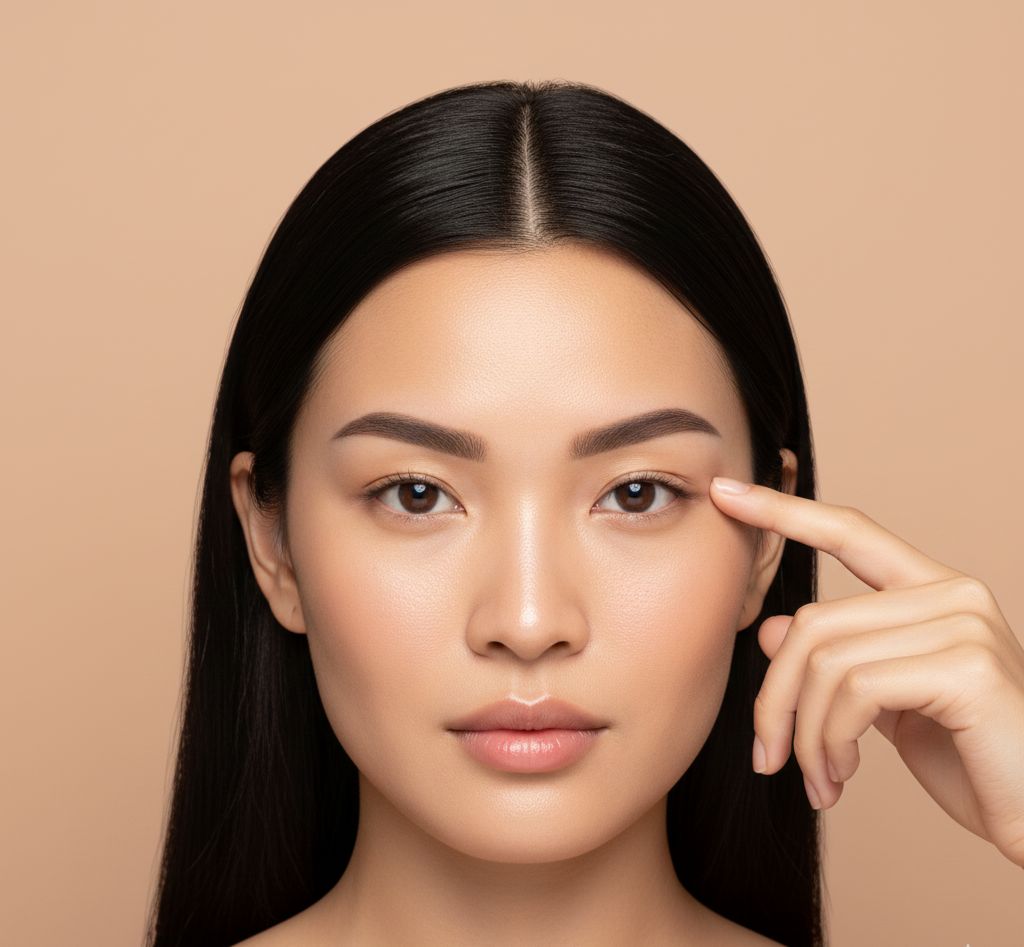
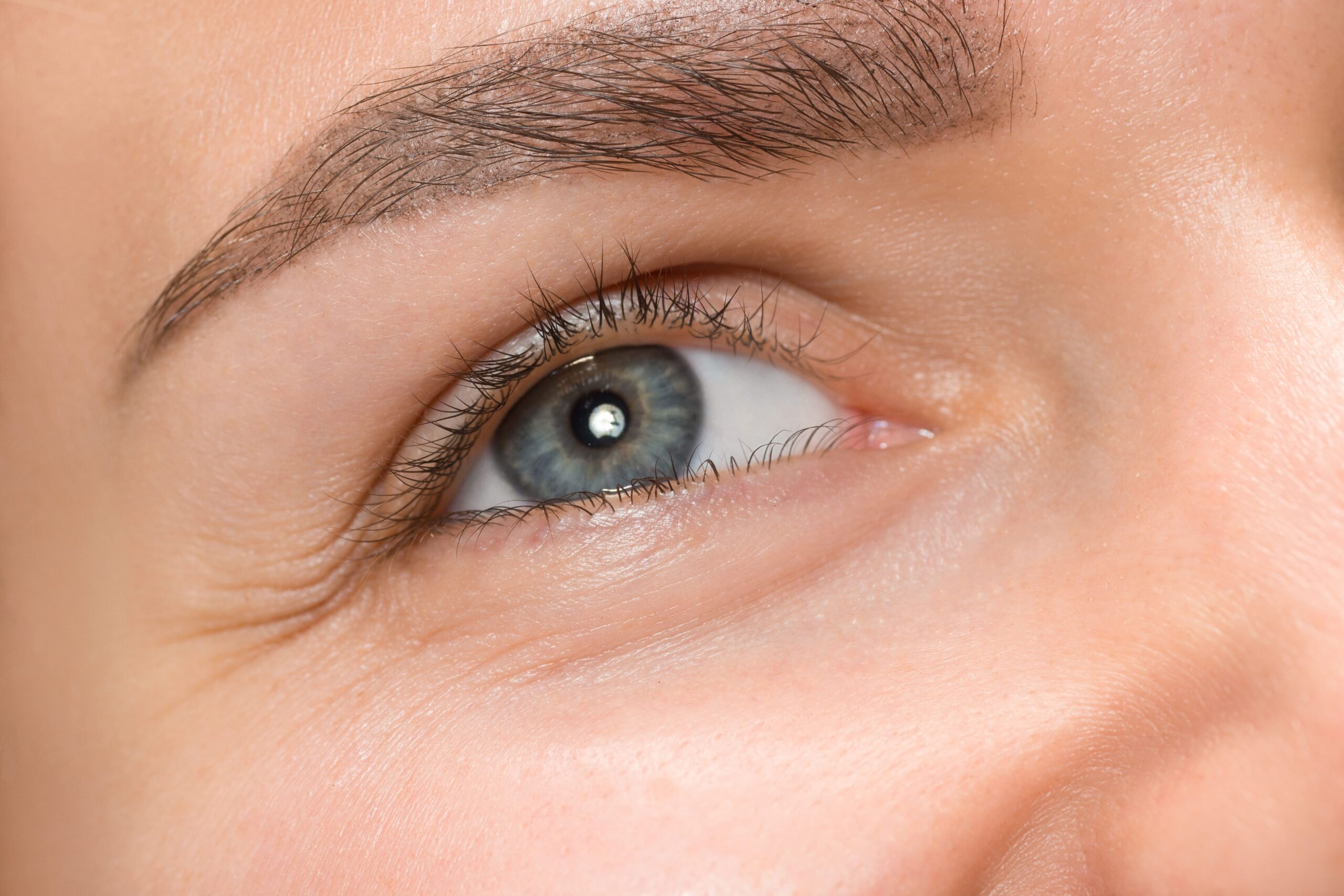
High-Intensity Focused Ultrasound (HIFU) is a non-invasive procedure that delivers targeted thermal energy to specific tissue depths. This energy is designed to facilitate collagen remodelling, the natural biological process by which the body repairs and produces collagen fibres, without disrupting the skin’s surface.
While some treatments focus on the surface, HIFU is engineered to reach deeper structural layers, including the Superficial Muscular Aponeurotic System (SMAS). This is a layer of connective tissue beneath the skin that provides essential structural support to the face.
How HIFU Technology Works on Eyelid Skin
HIFU devices use focused ultrasound waves that converge at predetermined focal points beneath the skin surface. At these focal points, temperatures reach elevated levels. This causes immediate collagen fibre contraction, a tightening effect, and subsequent new collagen growth. The surrounding tissue remains unaffected because the ultrasound energy only concentrates at the targeted depth.
The area around the eyes requires specialised handpieces designed for thinner tissue, as standard handpieces used for the cheeks or jawline penetrate too deeply for the delicate eyelid region. Based on individual skin thickness, the doctor selects the specific cartridge required to target the SMAS layer in this area. Typically, 1.5mm or 3mm cartridges are utilised for the eyes, while 3mm and 4.5mm cartridges are used for the jawline area. This ensures that energy delivery occurs at safe and appropriate depths.
Treatment typically involves multiple passes across the upper and lower eyelid areas, brow region, and crow’s feet zone. Each pass creates a grid pattern of heat points spaced closely apart. Your body’s natural wound healing response then works to replace the treated collagen with new, organised collagen fibres over several months.
Treatment Experience and What Happens During Your Session
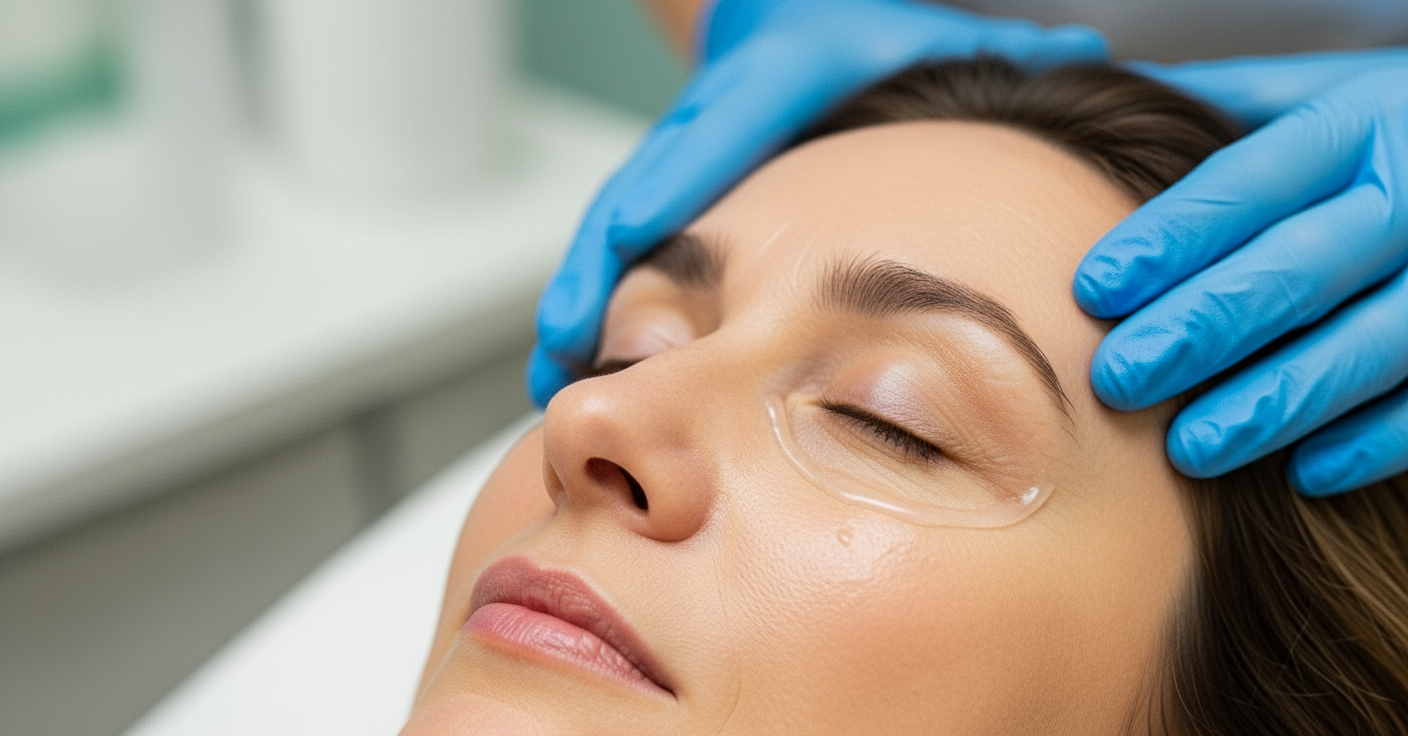
Eyelid HIFU sessions typically last between 30 and 45 minutes. Your practitioner begins by cleansing the skin and applying a numbing cream to ensure the procedure is comfortable. Ultrasound gel is then applied to facilitate the penetration of ultrasound energy into the skin. The practitioner positions the handpiece against the treatment area and delivers energy pulses, each creating a brief sensation often described as tiny electric pricks or heat beneath the skin surface.
The bony rim around your eye socket limits where treatment can safely occur. Energy delivery focuses on the upper lid below the brow, the lower lid above the cheekbone, and lateral areas where crow’s feet form. Your practitioner will avoid treating directly over the eyeball or too close to the lid edge for safety reasons.
While the procedure is generally tolerable without anaesthesia, a topical numbing cream can be applied for all patients for maximum comfort. The undereye area tends to be more sensitive than the upper lid region. Following the session, you may experience mild redness and warmth, which typically resolve within a few hours.
? Did You Know?
Ultrasound energy passes through the skin surface without absorption. This is why HIFU can target deep tissue layers while leaving the outer layer of your skin intact, unlike ablative lasers that remove surface skin cells.
Comparing HIFU Eyelid Treatment with Other Non-Surgical Options
Radiofrequency (RF) treatments, including RF microneedling jawline procedures, operate on different principles than HIFU. RF energy heats tissue through electrical resistance, creating volumetric heating across a larger area rather than focused thermal points. This makes it a suitable option to combine with HIFU for those looking to further enhance their results.
The mechanism of RF microneedling differs from both HIFU and traditional RF treatments. It delivers energy via fine, gold-plated microneedles that create multiple micro-channels in the skin. While it does not target the SMAS layer, it addresses the superficial skin layers differently than HIFU or bulk RF heating. For those seeking to optimise their outcomes, combining HIFU with RF or RF microneedling treatments can be an effective approach.
For eyelid rejuvenation specifically, HIFU’s focused delivery offers advantages in precision. The ability to target specific depths without affecting surface tissue reduces recovery time compared to ablative options or treatments that remove surface skin layers. However, RF microneedling can be used to treat skin texture concerns, scarring, and areas requiring combined collagen stimulation with skin resurfacing.
Treatment plans can incorporate both modalities. These plans use HIFU for lifting and tightening in the upper face and eye area, with RF microneedling jawline treatments addressing lower face definition and skin quality. This combination approach targets different aspects of facial ageing through complementary mechanisms.
Fractional lasers are another option for periorbital rejuvenation, primarily targeting superficial skin layers to address pigmentation, fine lines, and texture, though they offer less lifting effect than HIFU. Thread lifts provide immediate mechanical lifting through dissolvable sutures, though results vary over time as the threads gradually release.
HIFU takes a different approach—it stimulates your body’s natural collagen production rather than relying on physical materials. Results develop gradually as your skin’s foundation strengthens, addressing the underlying cause of laxity.
Expected Results and Treatment Timeline
Initial skin tightening occurs immediately from heat-induced collagen contraction. This represents a temporary effect while the more substantial collagen remodelling process begins. Progressive improvement continues over several months as new collagen forms and matures.
Results typically appear around the three-month mark. Continued improvement is possible up to six months post-treatment. Response times vary depending on your specific baseline skin laxity, age, collagen quality, and individual healing response. Patients with mild to moderate skin laxity generally see more noticeable results than those with significant tissue descent.
Results typically maintain for up to 12 to 18 months before a gradual return to baseline as natural ageing continues. Maintenance treatments at regular intervals can help sustain results. Some patients benefit from annual sessions as part of their ongoing skin maintenance routine.
⚠️ Important Note
While HIFU cannot replicate the results of surgical blepharoplasty, it remains a suitable option for patients who prefer to avoid invasive procedures. It offers a way to address these skin concerns with no downtime and minimal discomfort. Furthermore, HIFU provides a shorter treatment time and a more cost-effective alternative for those looking to improve the eye area naturally.
Ideal Candidates and Pre-Treatment Assessment
Understanding Suitability
Patients with mild to moderate eyelid skin laxity often respond well to HIFU treatment. Good skin elasticity—meaning the skin still bounces back when gently pinched—indicates sufficient collagen production capacity.
Those with heavy upper lids from excess skin, significant fat pockets, or substantial brow descent should discuss whether non-surgical options can adequately address their concerns. Even for those who opt for surgery, HIFU can help maintain surgical results over time.
Pre-Treatment Assessment
Before proceeding, your practitioner will assess your skin laxity, tissue thickness, and expected outcomes for this delicate area.
During your consultation, inform your doctor about:
- Any medications or supplements you’re taking
- Existing medical conditions (particularly if you have implanted devices)
- Previous eye surgeries or cosmetic procedures
- Current skincare products
- Pregnancy or breastfeeding status
This helps ensure the treatment is suitable and allows your practitioner to customize the protocol for your eye area.
✅ Quick Tip
Apply a cool compress gently if you experience swelling within the first few hours. Avoid applying ice directly to the skin and refrain from pressing firmly on the delicate tissue around your eyes to support a faster recovery.
What Our Aesthetic Specialist Says
Selecting appropriate candidates is important for achieving clinical goals with eye area HIFU. During consultation, we assess skin laxity degree, tissue thickness, and realistic outcome expectations. Some patients benefit from combination protocols. These incorporate HIFU with other modalities for comprehensive facial rejuvenation.
Treatment parameters differ significantly from other facial zones. Understanding these nuances directly impacts both safety and efficacy.
Commonly Asked Questions
How many HIFU sessions are needed for eyelid tightening?
Patients can achieve results from a single treatment session. Maintenance sessions may be recommended every 12 to 18 months. Some individuals with greater laxity may benefit from a second session after several months, once initial collagen remodelling has occurred, and results can be properly assessed.
Can HIFU be combined with other treatments on the same day?
Light, non-invasive treatments such as LED therapy can typically be performed alongside HIFU. However, other energy-based devices or chemical peels are usually scheduled separately to avoid overwhelming the tissue’s healing response. Injectables and RF microneedling sessions can either be separated from the HIFU session or combined; this decision is based on your specific HIFU dose and skin condition. Your treatment plan will be customised by your doctor during your pre-procedure consultation.
Is HIFU around the eyes painful?
Everyone experiences symptoms differently. Most describe it as brief, tolerable discomfort, a prickling or heating sensation during each energy pulse. The undereye area tends to be more sensitive than the upper lid region. You can apply a topical anaesthetic for additional comfort.
What age should I start considering HIFU for prevention?
Preventive treatments typically begin when the first signs of laxity appear or even before visible symptoms develop. Initiating treatment early may help maintain skin structure more effectively than addressing more substantial laxity later. In many cases, starting aesthetic treatments before ageing features become prominent can support the long-term maintenance of skin density and appearance.
How does HIFU compare in cost to surgical blepharoplasty?
HIFU represents a lower initial investment than surgery, with the trade-off of more subtle, gradual results and the need for maintenance treatments. Total long-term costs depend on treatment frequency and individual response. Surgical blepharoplasty (eyelid surgery) offers more dramatic, longer-lasting results. It involves greater upfront cost, recovery time, and surgical risks.
Next Steps
HIFU provides targeted collagen stimulation for mild to moderate eyelid laxity without surgery. Results appear gradually over several months as new collagen forms. Maintenance treatments every 12 to 18 months help sustain improvements.
If you are experiencing eyelid laxity, skin quality concerns around your eyes, or want to discuss combining HIFU with RF microneedling, consult an aesthetic specialist for an evaluation and personalised treatment recommendations.