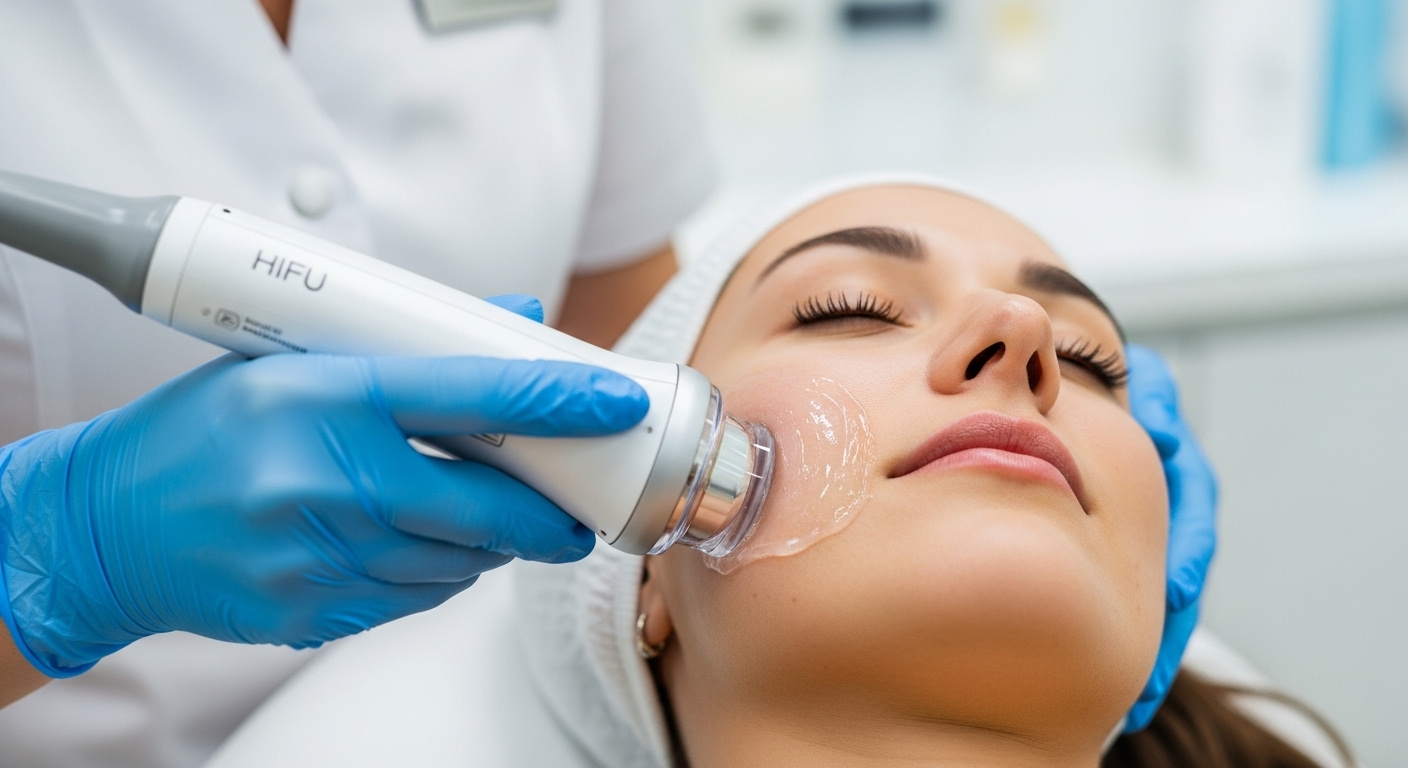
High-Intensity Focused Ultrasound (HIFU) delivers targeted ultrasound energy to specific skin depths, triggering collagen production and tissue tightening. Treatment sessions typically run 30-90 minutes depending on the area, while results develop over 2-6 months and maintain effectiveness for 12-24 months in most patients.
The longevity of HIFU results depends on multiple factors including skin condition, age, treatment parameters, and individual collagen response. Understanding these variables helps set realistic expectations and plan maintenance schedules effectively.
Understanding the timeline of your recovery is essential for managing expectations. The duration of your results is closely linked to how the HIFU treatment in Singapore targets the SMAS layer to initiate the body’s natural healing response, providing a gradual lift that evolves over time.
HIFU Treatment Timeline
HIFU works through three distinct phases. During treatment, focused ultrasound creates controlled micro-injuries at depths of 1.5mm, 3.0mm, and 4.5mm beneath the skin surface. These precise thermal coagulation points reach temperatures of 60-70°C, initiating immediate tissue contraction.
The inflammatory response begins within hours, activating fibroblasts and starting the wound healing cascade. This process continues for approximately 4-6 weeks as damaged tissue clears and new collagen matrix forms.
Peak results emerge between months 2-6 as Type III collagen gradually replaces with stronger Type I collagen fibers. The skin appears progressively firmer and more lifted during this remodeling phase. Some patients notice initial tightening within 2-4 weeks, though dramatic changes occur later.
Immediate vs Long-term Effects
Immediate tissue contraction from thermal coagulation provides subtle tightening visible within days. This represents approximately 20% of the total improvement patients eventually experience.
Progressive collagen remodeling drives the remaining 80% of results. Month one brings mild firmness improvements. Months two and three show accelerated lifting and contouring. By month six, maximum collagen density and organization manifest as optimal skin tightening.
The dual-phase response explains why patience proves important with HIFU. Unlike treatments providing instant gratification, HIFU delivers cumulative improvements that strengthen over time.
Factors Affecting Treatment Longevity
Age and Skin Condition
Younger patients with mild laxity often maintain results for 18-24 months due to robust collagen production capacity. Their fibroblasts respond vigorously to ultrasound stimulation, generating dense collagen networks.
Patients over 60 or those with moderate to severe laxity typically see results lasting 12-18 months. Decreased fibroblast activity and existing collagen degradation affect both initial response and longevity. These patients benefit from annual maintenance treatments.
Sun damage significantly impacts duration. Photoaged skin with extensive elastin breakdown responds well initially but requires more frequent touch-ups. Daily sunscreen use post-treatment extends results by protecting newly formed collagen.
Treatment Depth and Energy Levels
HIFU devices offer multiple transducer depths targeting different tissue layers. The 1.5mm transducer addresses superficial wrinkles in the dermis. The 3.0mm depth targets deeper dermal structures. The 4.5mm transducer reaches the SMAS (Superficial Musculoaponeurotic System) layer, providing foundational lifting.
Higher energy settings create more robust thermal injury and stronger collagen response. However, excessive energy risks complications without proportionally better results. Optimal protocols balance efficacy with safety, using energy levels of 0.4-1.2 Joules depending on treatment depth and area.
Multiple pass techniques, where practitioners layer treatments at different depths, enhance longevity. This comprehensive approach stimulates collagen throughout multiple tissue planes, creating more dramatic and lasting improvements.
Lifestyle and Maintenance
Smoking reduces HIFU longevity by approximately 6 months through vasoconstriction and oxidative stress. Nicotine impairs fibroblast function and accelerates collagen breakdown, undermining treatment benefits.
Regular exercise enhances results through improved circulation and growth factor release. Patients maintaining consistent fitness routines report longer-lasting firmness compared to sedentary individuals.
Skincare regimens incorporating retinoids, vitamin C, and peptides support HIFU results. These ingredients stimulate ongoing collagen production and protect against degradation. Professional-grade formulations prove particularly beneficial.
Hydration status affects treatment longevity. Well-hydrated skin maintains collagen integrity longer. Patients drinking 2-3 liters of water daily often experience extended results compared to those with chronic dehydration.
Results Duration by Treatment Area
Face and Neck
Cheek and jawline treatments typically maintain effectiveness for 12–18 months. At a medical aesthetic clinic in Singapore, these areas are known to respond well because the SMAS layer reacts robustly to ultrasound energy, resulting in noticeable lifting. Improvements in jowls and jawline definition usually remain visible throughout this period.
Forehead and brow lifting generally lasts 12–15 months on average. The thinner tissue and constant muscle movement in this region contribute to a slightly shorter duration. Patients often continue to notice eyebrow elevation and softer forehead lines within this timeframe.
Neck tightening shows particularly strong longevity, often lasting 15–20 months. The neck’s thicker dermis and lower level of repetitive facial movement help preserve results. Horizontal neck lines and loose skin under the chin tend to show sustained improvement over a longer period.
Body Treatments
Abdominal tightening maintains results for 12-18 months when combined with stable weight. The treatment addresses mild skin laxity following pregnancy or minor weight loss. Significant weight fluctuations shorten result duration.
Upper arm treatments last 10-15 months. The constant movement and thinner skin in this area contribute to shorter longevity compared to facial treatments. Regular arm exercises help maintain firmness.
Thigh and knee treatments show results for 12-16 months. These areas respond well to HIFU but require consistent maintenance due to gravity’s effects and natural aging progression.
Maintenance Protocol Recommendations
Initial Treatment Series
Single session protocols work well for patients under 45 with mild laxity. One comprehensive treatment stimulates sufficient collagen for noticeable improvement lasting 12-18 months.
Patients with moderate laxity benefit from two sessions spaced 3 months apart. The second treatment builds upon initial collagen formation, creating cumulative tightening. This approach extends results to 18-24 months total.
Severe laxity may require three sessions over 6-9 months. Each treatment progressively tightens tissue, though realistic expectations remain important. Even multiple sessions cannot replicate surgical outcomes.
Follow-up Scheduling
Annual touch-up treatments maintain results indefinitely for most patients. Scheduling maintenance before complete result degradation preserves lifted appearance without starting from baseline.
Some patients prefer bi-annual lighter treatments, receiving half the usual number of shots every 6 months. This approach provides consistent collagen stimulation with less downtime per session.
The optimal maintenance schedule varies individually. Patients noticing decreased firmness around month 10 should schedule touch-ups by month 12. Waiting until results completely fade requires more intensive retreatment.
Combining HIFU with Other Treatments
Radiofrequency treatments complement HIFU by targeting different collagen types and depths. Alternating between modalities every 6 months provides comprehensive skin tightening through varied mechanisms.
Dermal fillers work synergistically with HIFU. Fillers restore volume while HIFU tightens overlying skin. This combination creates natural-looking facial rejuvenation lasting 15-24 months.
Thread lifts plus HIFU deliver immediate lifting with long-term tightening. Threads provide instant structure while HIFU ensures sustained collagen support. Combined results often exceed 2 years.
Skin resurfacing lasers enhance HIFU outcomes by improving texture and tone. Fractional CO2 or erbium treatments 3 months post-HIFU refine results. The combination addresses both laxity and surface irregularities.
? Did You Know?
HIFU technology originated from therapeutic ultrasound used in physical therapy. The focused beam concept was adapted for aesthetic purposes by concentrating energy at specific tissue depths without affecting surrounding structures.
What Our Aesthetic Doctor Says
“HIFU longevity varies significantly between individuals, but proper patient selection ensures optimal duration, whether someone is undergoing a standard protocol or exploring alternative micro-focused ultrasound options like Ultherapy Prime in Singapore. I assess skin thickness, laxity degree, and collagen quality during consultation to predict realistic timelines. Patients maintaining results longest typically combine good skincare habits with timely maintenance treatments.
The important factor lies in treating before significant laxity returns. Once patients drop below their post-treatment baseline, achieving the same lifted result requires more aggressive protocols. I recommend photographing results at the 6-month peak, then scheduling maintenance when you notice 20-30% degradation from that optimal point.”
Putting This Into Practice
- Schedule your HIFU treatment considering important events, allowing 3-6 months for full results to develop before special occasions
- Document your results with standardized photos at 2, 4, and 6 months post-treatment to track your individual response pattern and optimal maintenance timing
- Incorporate medical-grade skincare products containing peptides and growth factors starting one week post-treatment to support collagen production
- Maintain consistent sun protection with broad-spectrum SPF 50 daily, reapplying every 2 hours during outdoor exposure to preserve treatment benefits
- Set calendar reminders at 9 and 12 months post-treatment to assess firmness levels and schedule maintenance before significant laxity returns
When to Seek Professional Help
- Skin laxity progressing faster than expected despite recent HIFU treatment
- Asymmetric results developing after the initial healing period
- New medical conditions potentially affecting collagen production or healing
- Interest in combining HIFU with other rejuvenation treatments
- Uncertainty about appropriate maintenance intervals for your skin type
- Desire for more dramatic results than HIFU alone provides
Commonly Asked Questions
Can I extend my HIFU results with at-home devices?
Professional HIFU delivers focused energy at specific depths impossible to replicate with consumer devices. At-home ultrasound or radiofrequency tools operate at lower energies and different mechanisms. While these may provide mild skin benefits, they cannot extend professional HIFU results significantly.
Why do some people need retreatment sooner than others?
Genetic factors, lifestyle habits, and baseline skin condition create individual variation. Patients with naturally thin skin, sun damage history, or reduced collagen production capacity typically need maintenance every 12 months versus 18-24 months for those with favorable characteristics.
Does the treatment hurt less during maintenance sessions?
Maintenance treatments often feel more comfortable than initial sessions. The reduced shot count for touch-ups means shorter treatment duration. Additionally, patients know what to expect, reducing anxiety-related discomfort. Most describe maintenance as very tolerable.
Can weight loss affect my HIFU results?
Moderate weight fluctuations under 10 pounds rarely impact results. Significant weight loss may create new skin laxity that appears to diminish HIFU effects. Maintaining stable weight optimizes treatment longevity. Major weight loss patients should wait until reaching goal weight before treatment.
Is there an age when HIFU stops being effective?
HIFU can benefit patients into their 70s and beyond, though expectations must align with skin capacity. Older patients may see shorter duration and subtler improvements, but many still experience worthwhile tightening. Individual assessment determines suitability rather than age alone.
Are there other treatments that can help maintain my HIFU results?
Yes, maintenance is often multi-layered. To sustain skin elasticity between annual sessions, many patients incorporate RF Microneedling in Singapore into their long-term skin health programme. While HIFU focuses on lifting the deeper structural layers, radiofrequency microneedling addresses the more superficial dermis, helping to keep the skin’s surface firm and the texture refined between major lifting procedures.
Next Steps
HIFU treatment can deliver natural-looking skin tightening that lasts 12 to 24 months for many patients. Tracking your individual response over time enables optimal maintenance scheduling. Pairing professional treatments with protective skincare maximises results and value.
Scheduling touch-up sessions before results fully fade helps maintain continuous skin firmness. This proactive approach typically requires less intensive retreatment compared with waiting for full laxity to return.
If you’re experiencing facial laxity or reduced skin firmness, our MOH-accredited aesthetic doctors can assess your suitability for HIFU treatment in Singapore and design a personalised protocol for lasting results.